 CLE
CLE  CHW
CHW 
 PHI
PHI  OTT
OTT  UTA
UTA  BOS
BOS  DAL
DAL  BUF
BUF  NSH
NSH  MTL
MTL  MIN
MIN  TB
TB  VAN
VAN  CAR
CAR  CHI
CHI  NYI
NYI  SJ
SJ  STL
STL  COL
COL  CGY
CGY  TOR
TOR  VGK
VGK  TB
TB  DAL
DAL  BOS
BOS  CLE
CLE  NOP
NOP  MIA
MIA  PHI
PHI  BKN
BKN  WAS
WAS  NYK
NYK  ATL
ATL  SAS
SAS  SAC
SAC  LAL
LAL  SEA
SEA  DET
DET  NYR
NYR  WSH
WSH  PIT
PIT  CBJ
CBJ  ANA
ANA  WPG
WPG  HOU
HOU  DAL
DAL  MEM
MEM  CHI
CHI 

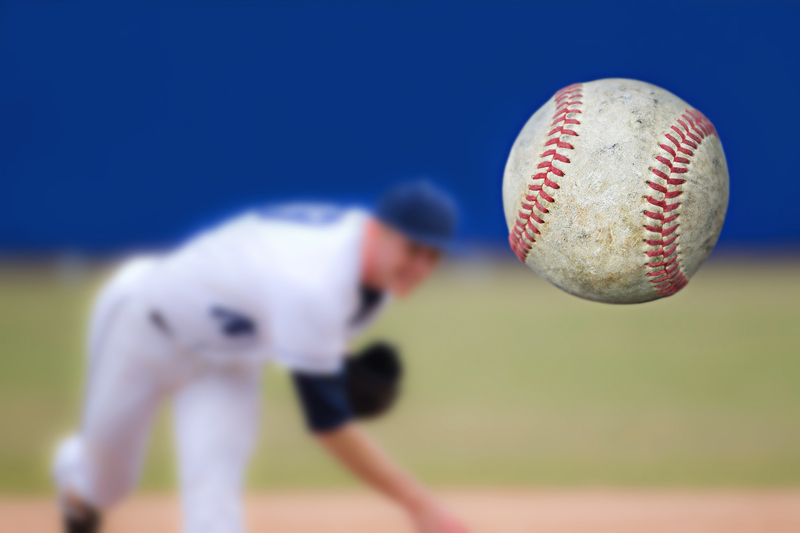
Fourteen years ago, a group of 20 Canadian teenage baseball players gathered on the outskirts of Seoul, South Korea, unaware that they were about to face a future global superstar. As they prepared for their opening matchup against Team Japan in the 2012 18-and-under Baseball World Championship, head coach Greg Hamilton delivered a sobering message. “The guy on the mound for Japan is the best 18-year-old pitcher in the world,” he warned, adding, “And he’s also the best 18-year-old hitter in the world.” His words foreshadowed the emergence of Shohei Ohtani.
Back then, Ohtani’s name was spelled “Otani” in official box scores, but his talent was already drawing attention. Fast forward to today, the now 31-year-old Ohtani has transformed into a national hero and captain of Japan’s quest for back-to-back World Baseball Classic titles. Three years ago, he showcased his dual-threat prowess by winning the tournament MVP Award, going 10-for-23 at the plate while also excelling on the mound.
As the 2026 tournament progresses, all eyes are on Ohtani, who is set to lead Samurai Japan against Venezuela in the quarterfinals. Yet, his illustrious international career began with a rocky debut in front of just 125 spectators. In what would be his first appearance for Team Japan, Ohtani, already gaining recognition in his homeland, struggled against a determined Canadian squad that had little knowledge of his capabilities until Hamilton’s pregame briefing.
“He throws super hard. He knows what he’s doing,” Robson recalled Hamilton saying. “Everybody’s been on him since he was a young kid. He’s a prodigy.” Despite this warning, Ohtani’s inaugural pitching performance was less than stellar: 3 1/3 innings pitched, three hits, three earned runs, four walks, and four strikeouts. At the plate, he managed to go 1-for-3 with an intentional walk.
Interestingly, while MLB scouts were present, their attention was drawn elsewhere, as a highly touted Korean lefty named Hyun-Jin Ryu was also pitching that day. This meant that Ohtani’s debut went somewhat unnoticed, despite his evident talent. Canadian players were taken aback by Ohtani’s velocity, with shortstop Daniel Pinero recalling, “He’s just pumping heat, 94, 95. At that time, nobody threw that hard, especially high schoolers.”
Ohtani’s fastball left the Canadian hitters struggling, as he struck out three batters in the second inning, including future All-Star Josh Naylor. However, his command faltered in the third, allowing Canada to score its first run. By the fourth inning, Ohtani’s outing came to an end after a series of walks and hits led to Canada taking the lead. Despite being pulled from the mound, Ohtani’s day was not over; he transitioned to the outfield and continued to contribute offensively.
In the seventh inning, Ohtani delivered an RBI single, but the game took a dramatic turn. Canada’s Jesse Hodges hit a two-run homer in the bottom of the ninth, tying the game and sending it into extra innings. The Canadians eventually clinched the victory on a wild pitch in the tenth. Hodges encapsulated the moment perfectly: “These are the types of games that you dream for as a kid.”
While Canada celebrated a silver medal finish in the tournament, Ohtani would later redeem himself, dominating in a fifth-place game against host Korea. However, that first outing against Canada remains etched in the memories of those who played against him. As Robson noted, “I always say that to random people when they’re talking about Ohtani — like, ‘Oh, I played against him in high school.’ They’re like, ‘What?’”
Note: This recap is an independently written summary based on publicly available reporting.