 TB
TB  BOS
BOS  LAD
LAD  NYY
NYY  CHW
CHW  TOR
TOR  TEX
TEX  ATL
ATL  MIA
MIA  MIL
MIL  MIN
MIN  CHC
CHC  SD
SD  KC
KC  BAL
BAL  HOU
HOU  CIN
CIN  COL
COL  DET
DET  LAA
LAA  STL
STL  ARI
ARI  WSH
WSH  OAK
OAK  SF
SF  SEA
SEA 
 PIT
PIT  CLE
CLE  NYM
NYM  PHI
PHI 

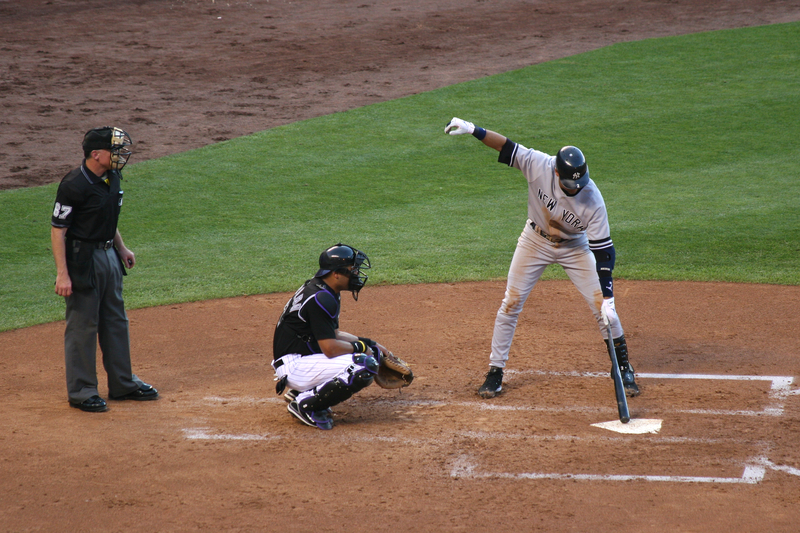
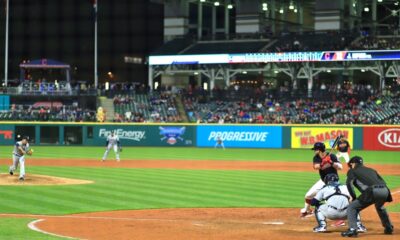
In a moment that marked a new chapter in Major League Baseball, José Caballero of the New York Yankees became the first player to initiate an Automated Ball-Strike (ABS) challenge during a regular season game. This historic event unfolded in the fourth inning of the Opening Night match against the San Francisco Giants, showcasing the league’s long-awaited integration of advanced technology into its gameplay.
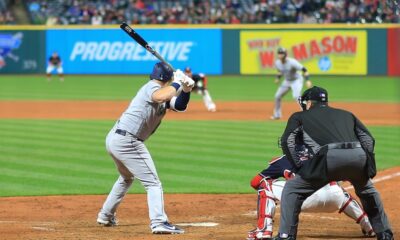
As Caballero stepped to the plate, he immediately challenged the strike call made by home plate umpire Bill Miller on the very first pitch. Unfortunately for the Yankees shortstop, the challenge did not succeed, leaving him with an 0-1 count. He subsequently grounded out on an 0-2 count just two pitches later, marking the end of his at-bat.
The timing of this groundbreaking moment was somewhat awkward, as it coincided with a live interview of Giants manager Tony Vitello being aired on Netflix. This led to a brief delay in acknowledging the significance of Caballero’s challenge, but the historical weight of the event was not lost on fans and players alike.
The journey to this moment has been years in the making. MLB began experimenting with the ABS challenge system in the minor leagues before expanding its use during spring training and the 2025 All-Star Game. The positive feedback from these trials prompted the Joint Competition Committee to approve the system for the 2026 regular season and postseason.
Under the new ABS challenge system, each team starts the game with two challenges. If a team successfully overturns a call, they retain their challenge for later use. However, if they lose both challenges, they cannot initiate another unless the game goes into extra innings. To challenge a call, players must tap their head immediately after the decision is made, prompting an official announcement from the umpire and a visual display in the stadium indicating the pitch’s location.
In extra innings, teams that have exhausted their challenges during regulation play will receive one challenge per inning. However, if they carry over any unused challenges into extra innings, they will not receive an additional challenge. Notably, the ABS challenge system cannot be used if a position player is pitching.
During the spring training trials, players frequently exercised their right to challenge calls, but it remains to be seen if this trend will persist in the regular season. While there are strategic advantages to overturning a call early in a game, utilizing the ABS challenge at critical moments, such as a game-ending strikeout or extending a final at-bat, can significantly influence the outcome.
With the first ABS challenge now recorded in the history books, the anticipation builds for how this innovative system will shape the dynamics of future games.
Note: This recap is an independently written summary based on publicly available reporting.