 BUF
BUF  TOR
TOR  NYI
NYI  OTT
OTT  SEA
SEA  TB
TB  VAN
VAN  FLA
FLA  NYR
NYR  NJ
NJ  PHI
PHI  DET
DET  WPG
WPG  CHI
CHI  SJ
SJ  NSH
NSH  STL
STL  MIN
MIN  UTA
UTA  EDM
EDM  CGY
CGY  VGK
VGK  SEA
SEA  DEN
DEN  TOR
TOR  NYK
NYK  OKC
OKC  HOU
HOU  PIT
PIT  COL
COL  BOS
BOS  ANA
ANA  MIA
MIA  ORL
ORL  BOS
BOS  PHI
PHI  DET
DET  MIL
MIL  IND
IND  ATL
ATL  DAL
DAL  SAC
SAC  SAS
SAS  CHA
CHA  MEM
MEM  WAS
WAS  NOP
NOP  MIN
MIN  CHI
CHI  POR
POR  GSW
GSW  UTA
UTA  PHX
PHX  DEN
DEN  LAL
LAL  WSH
WSH  CAR
CAR  MTL
MTL  CBJ
CBJ  DAL
DAL  LA
LA 

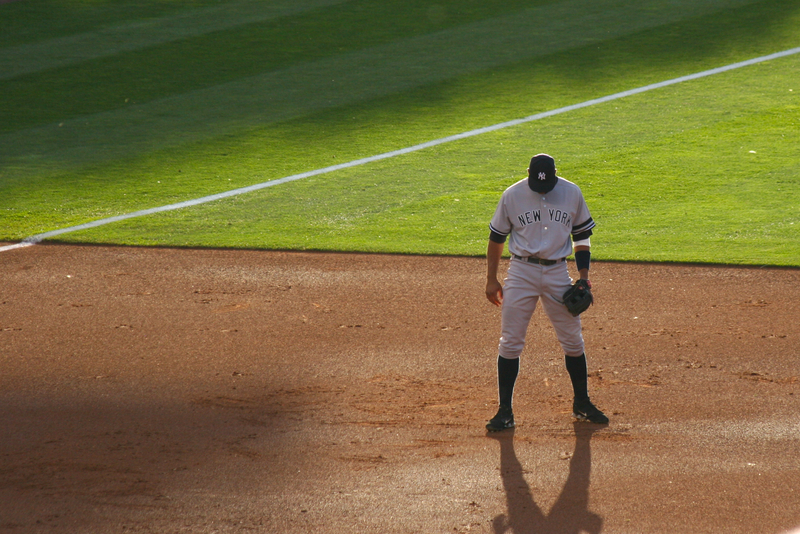
The 1920s marked a seismic shift for the New York Yankees, transitioning from an overlooked franchise to a powerhouse in Major League Baseball. This transformation was largely fueled by the arrival of Babe Ruth and the emergence of the iconic Murderers’ Row. Amidst the stars like Ruth and Lou Gehrig, some players, such as right-handed relief pitcher Herb McQuaid, played pivotal yet understated roles in this era of greatness.
Herbert George McQuaid was born on March 29, 1899, in San Francisco, California. Growing up near Recreation Park, home of the Class AA San Francisco Seals, young McQuaid developed his passion for baseball while watching games from his window. However, his childhood was marked by tragedy when he lost his father to suicide at the age of 13, a loss that would deeply impact his life.
After attending Mission High School, McQuaid pitched for a local neighborhood team before moving to Oakland for his senior year. By 1919, he was balancing work as a stenographer with playing for the St. Joseph’s Sodality team in the Oakland Midwinter League. His talent caught the eye of local professionals after a near-no-hitter for the J.J. Kriegs store team in 1920, leading to an invitation to try out for the Seals. He impressed during his audition, securing a spot on the Opening Day roster after a couple of pitchers were released.
McQuaid made a memorable professional debut, throwing a complete game to secure a 2-1 victory over Portland at Recreation Park. His skills were further showcased when he retired Ty Cobb twice during a barnstorming tour in San Francisco. Over two seasons with the Seals and a stint with the Los Angeles Angels, he drew the attention of Cincinnati Reds scout Dick Egan, ultimately signing with the team prior to the 1923 season.
Making his MLB debut on June 22, 1923, McQuaid faced a tough start against the Pirates, allowing a run in two innings of relief. Standing 6’3”, he was known for his “blinding” fastball and an impressive array of pitches, including a fast overhand curve and a slower underhand curve. After dealing with injuries that sidelined him for over a month, he made a strong comeback, earning a 2.36 ERA across 12 appearances that season.
In the winter of 1923, the Reds sold McQuaid to the St. Paul Saints as part of a deal involving Chuck Dressen. He spent two seasons there, achieving a record of 21-14 with a 4.39 ERA. In September 1925, the Yankees acquired McQuaid from the Saints, agreeing to pay an additional $25,000 if he remained on the roster past May 1st.
McQuaid made the Yankees’ Opening Day roster but was returned to the Saints after just one game. However, the Yankees quickly traded for him again, sending a package of players and cash back to St. Paul. He made one start for New York that season, allowing three runs over seven innings in a narrow 4-3 victory against the Tigers. Although he ended the year with a 6.10 ERA, he did not pitch in the Yankees’ final 14 games.
As the Yankees advanced to the World Series that year, McQuaid was the last player added to the roster, instructed to only play in emergencies. Ultimately, he didn’t see action as the Yankees fell to the Cardinals in a thrilling seven-game series. Following the season, he was sold back to the Saints for $10,000, and he would not pitch in the majors again.
McQuaid continued to play in the Class AA leagues until his retirement in 1932. After baseball, he ran a taproom in Modesto and later worked as a bartender in Oakland, where he also coached local youth teams. Herb McQuaid passed away from cancer on April 4, 1966, in Richmond, California, at the age of 67. While he may be a relative footnote in Yankees history, his journey reflects the complexities and personal stories behind the legendary franchise.
Note: This recap is an independently written summary based on publicly available reporting.