 STL
STL  PIT
PIT  CHW
CHW  KC
KC  MIA
MIA  CHC
CHC  NYM
NYM  TEX
TEX  ARI
ARI  COL
COL  MIL
MIL  PHI
PHI  CLE
CLE  BOS
BOS  TB
TB  NYY
NYY  CIN
CIN  ATL
ATL  LAA
LAA  SEA
SEA  HOU
HOU  OAK
OAK  SD
SD  LAD
LAD 
 BOS
BOS  PHI
PHI  BUF
BUF  DET
DET  PIT
PIT  CBJ
CBJ  NJ
NJ  NYR
NYR  NSH
NSH  CAR
CAR  FLA
FLA  TB
TB  CHI
CHI  STL
STL  EDM
EDM  VAN
VAN  CGY
CGY  SEA
SEA  UTA
UTA  VGK
VGK  ANA
ANA  SJ
SJ  ATL
ATL  GB
GB  BAL
BAL  DET
DET  WSH
WSH  TOR
TOR  MIN
MIN  SF
SF  WSH
WSH  NYI
NYI  DAL
DAL  MIN
MIN  WPG
WPG  COL
COL  LA
LA  MTL
MTL  OTT
OTT 

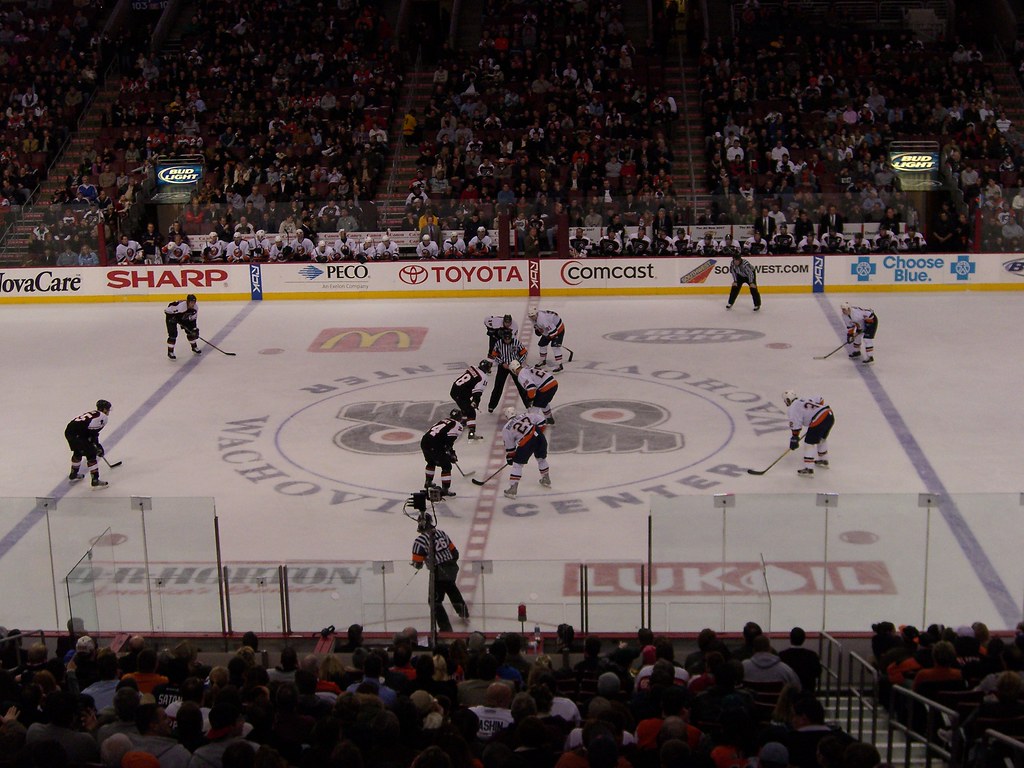
In the high-stakes world of NHL playoffs, moments arise where conviction meets friction. For the Philadelphia Flyers, this friction has been palpable in their series against the Pittsburgh Penguins. Initially, their lineup remained untouched through the first three games—not out of obstinacy, but due to the success they had achieved. The structure was solid, and the results followed suit.
However, Game 4 served as a wake-up call, reminding the Flyers that their lineup was not impervious. Coach Rick Tocchet made a significant decision in Game 5, opting to insert Alex Bump into the lineup in place of Matvei Michkov. This move sparked debate, but it was rooted in a desire for directness and immediate impact, favoring a player who could simplify plays and engage early in the game.
The result of this swap was telling—Bump not only scored an important goal but also delivered a series of dynamic shifts that aligned with the Flyers’ needs. His quick decisions and purposeful movement on the ice brought an energy that the team required. While the conversation about Michkov’s role continues, Tocchet’s readiness to adapt was validated, and as the series shifts to Game 6, there are indications that further changes may be on the horizon, particularly on defense.
Oliver Bonk, a promising young defenseman, now finds himself in the mix. Defensive pairings are built on trust, both in skill and predictability, making coaches hesitant to alter them unless necessary. Yet, Game 4 exposed subtle vulnerabilities in the Flyers’ defensive game, prompting a reevaluation of their pairings. The Flyers admitted that finding complementary pairings has been a challenge, as they navigate the varying styles and sizes of their blue line. Pittsburgh’s ability to stretch the ice tested Philadelphia’s defensive structure, leading to longer sequences and increased pressure.
In this context, Bonk’s attributes become particularly appealing. He brings size, reach, and a calm presence with the puck, but more crucially, he possesses an efficient understanding of the game. Since being drafted by the Flyers in 2023, Bonk has earned praise for his intelligence and maturity on the ice. As Lehigh Valley Phantoms head coach John Snowden noted, Bonk has the tools necessary to adapt seamlessly to the NHL, which is vital for a young player stepping into a playoff environment.
Bonk’s offensive instincts could also be a boon for the Flyers, particularly in power play situations. While Philadelphia’s power play has shown flashes of promise, it has struggled to consistently generate high-quality chances. A defenseman who can hold the line and manipulate passing lanes would significantly enhance their effectiveness in these critical moments. Bonk has the potential to provide that spark, even if he is not yet a finished product.
However, the stakes are high. With just one NHL game under his belt, Bonk’s potential insertion into Game 6—a pivotal moment in the series—represents a significant challenge. The pressure is amplified, especially against a determined Pittsburgh team looking to mount a comeback. Yet, the Flyers have already demonstrated a willingness to trust their young players in crucial roles throughout this series.
Tocchet has not made any public commitments regarding Bonk’s inclusion, but the mere fact that he is under consideration is telling. It illustrates that every position is subject to evaluation, even the delicate defensive pairings. The Flyers have shown that while continuity is a strength, adaptability is essential for sustaining success. If Bonk steps onto the ice in Game 6, it will be because the Flyers have identified a specific need and believe he can fulfill it, not out of desperation.
Note: This recap is an independently written summary based on publicly available reporting.