 CHW
CHW  CLE
CLE  NYY
NYY  TB
TB 
 PHI
PHI  TB
TB  OTT
OTT  BOS
BOS  WPG
WPG  PIT
PIT  SJ
SJ  DAL
DAL  ATL
ATL  NO
NO  MEM
MEM  ATL
ATL  PHX
PHX  DET
DET  NYK
NYK  PHI
PHI  MIN
MIN  MIL
MIL  LAL
LAL  SAC
SAC  LAD
LAD  ATL
ATL  MIL
MIL  SD
SD  CAR
CAR  MTL
MTL  NSH
NSH  TOR
TOR  DET
DET  UTA
UTA  NJ
NJ  MIN
MIN  BUF
BUF  NYI
NYI  NYR
NYR  STL
STL  CHI
CHI  VGK
VGK  SEA
SEA  FLA
FLA  LA
LA  BKN
BKN  CHA
CHA  NOP
NOP  OKC
OKC  DEN
DEN  UTA
UTA  GSW
GSW 

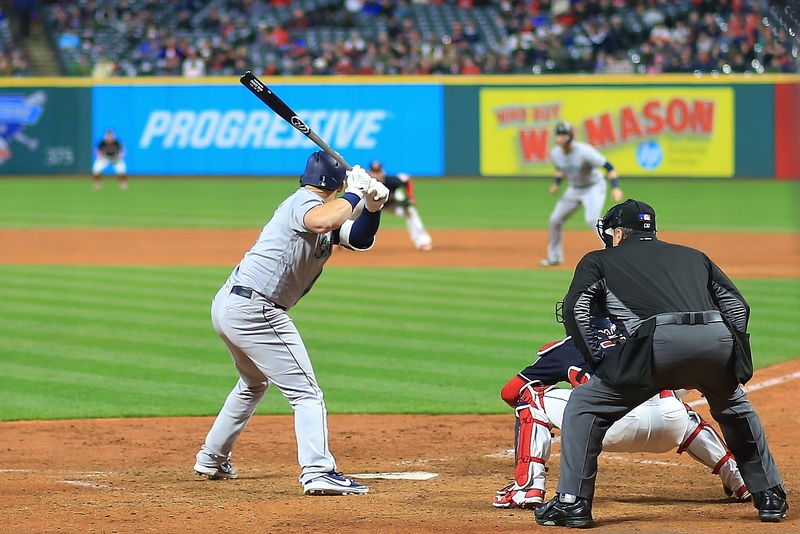
In a peculiar moment of baseball history on May 21, 1880, Albany, New York, witnessed an unusual play that would baffle modern fans. Lip Pike, playing for the local National Association team, hit a fly ball that soared over the right field fence and splashed into the nearby river. In a remarkable display of dedication, outfielder Lon Knight of the visiting Worcester Ruby Legs jumped into a boat to retrieve the ball, as it remained a live ball despite its watery descent.
Today, when a ball crosses the outfield fence, it’s automatically deemed out of play. The determination of a home run versus a ground-rule double hinges on whether the ball cleared the fence on the fly or bounced. Yet, this rule, like many others in baseball, evolved organically rather than being inscribed in stone by the game’s founders. While the Baseball Almanac does not pinpoint the exact moment this regulation was established, it likely took shape before the National League was founded in 1876. On May 2 of that year, Ross Barnes of the Chicago White Stockings hit what is recognized as the first home run in Major League history, but the definitions were far from straightforward.
Throughout the 19th century, baseball operated without a centralized rulebook, leaving the specifics largely to the discretion of the home team. This meant that the rules governing each game could vary significantly, a practice that persisted even after the establishment of the National League, which initially focused more on consolidating power among leagues than on standardizing play. Even today, individual ballparks implement unique rules for how to interpret certain plays, such as when a ball strikes a catwalk or gets lodged in the ivy.
As for Knight’s daring boat chase, the story raises eyebrows. How sluggish could Pike have been that Knight found it reasonable to hop a fence, board a boat, and set sail down the river? The SABR biography of Knight acknowledges that “there is undoubtedly some fictitious element to the story.” Given the limited number of baseballs in circulation back then, it seems more plausible that Knight’s river foray was less about continuing the play and more about recovering the ball to keep the game moving. This tale underscores the fluidity of baseball rules, which were largely dictated by the venue; had every ball over the fence been a home run, such a story would never have emerged.
Some teams, like the Chicago White Stockings, took advantage of these varying rules. In the early 1880s, their home field featured short fences—some sources suggest they were less than 200 feet from home plate. Convention at the time dictated that balls hit over fences shorter than 250 feet were doubles, but in 1884, the White Stockings altered their ground rules to classify all balls that cleared the fence as home runs. This change allowed Ned Williamson to rack up an astonishing 27 home runs, a record that would stand until Babe Ruth surpassed it in 1920.
To curb such exploits, the rules surrounding batted balls began to be standardized. Initially, all fly balls clearing the wall were home runs, while those bouncing just once before crossing the line were also included. This mirrored the earlier rule where batted balls caught on one bounce were considered outs until changes were made in 1931, leading to the modern ground-rule double. Today, the antics surrounding long fly balls are largely confined to amateur games, little leagues, or casual softball matches, illustrating just how far baseball has come since the days of Lip Pike and the adventurous Lon Knight.
Note: This recap is an independently written summary based on publicly available reporting.