 BUF
BUF  TOR
TOR  NYI
NYI  OTT
OTT  SEA
SEA  TB
TB  VAN
VAN  FLA
FLA  NYR
NYR  NJ
NJ  PHI
PHI  DET
DET  WPG
WPG  CHI
CHI  SJ
SJ  NSH
NSH  STL
STL  MIN
MIN  UTA
UTA  EDM
EDM  CGY
CGY  VGK
VGK  SEA
SEA  DEN
DEN  TOR
TOR  NYK
NYK  OKC
OKC  HOU
HOU  PIT
PIT  COL
COL  BOS
BOS  ANA
ANA  MIA
MIA  ORL
ORL  BOS
BOS  PHI
PHI  DET
DET  MIL
MIL  IND
IND  ATL
ATL  DAL
DAL  SAC
SAC  SAS
SAS  CHA
CHA  MEM
MEM  WAS
WAS  NOP
NOP  MIN
MIN  CHI
CHI  POR
POR  GSW
GSW  UTA
UTA  PHX
PHX  DEN
DEN  LAL
LAL  WSH
WSH  CAR
CAR  MTL
MTL  CBJ
CBJ  DAL
DAL  LA
LA 

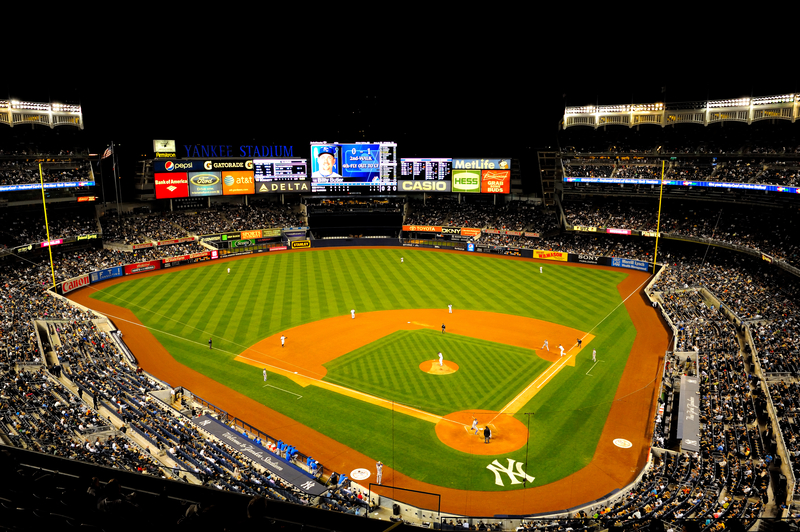
In the early days of the New York Yankees, long before the franchise became synonymous with greatness, the team was home to a number of talented players who would go on to achieve championship glory. Among them was Rube Oldring, whose career with the Yankees was marked by both promise and misfortune. As we commemorate what would have been Oldring’s 142nd birthday, it’s a fitting time to delve into the life and legacy of this notable outfielder.
Born on May 30, 1884, in New York City, Reuben Henry “Rube” Oldring was the son of immigrants and one of eight children. His passion for baseball emerged early, leading him to play for various semi-pro teams throughout New York and New Jersey. Oldring’s talent caught the eye of professional scouts, and by 1905, he had signed with the Montgomery Senators of the Southern Association.
Oldring quickly made his mark in Alabama, and by the end of his rookie season, his contract was purchased by the Philadelphia Athletics. However, with the A’s embroiled in a tight pennant race, manager Connie Mack instructed the rookie to keep his skills sharp by playing semi-pro games. In a twist of fate, Oldring found himself back in New York, where he impressed in an exhibition match against the Highlanders, hitting a home run. This performance caught the attention of Highlanders’ manager Clark Griffith, who managed to sign him despite Oldring’s existing contract with the A’s.
In 1905, Oldring played eight games for the Highlanders, showcasing his potential with a .300 batting average and a 146 OPS+. Yet, he returned to the Athletics for the following season. Mack, recognizing Oldring’s strong arm but erratic throwing, transitioned him to center field, where he would spend the majority of his career.
Oldring’s tenure with the Athletics saw him evolve into a key player, particularly during the early 1910s. His standout year came in 1910, when he posted an impressive 4.3 fWAR and a 141 OPS+. He played a crucial role in the Athletics’ dynasty, contributing to World Series victories in 1911 and 1913 and even appearing in the silent film “The Baseball Bug” in 1911, solidifying his status as a fan favorite.
However, following a disappointing loss in the 1914 World Series, the A’s began to dismantle their roster. While many stars departed, Oldring remained until a slow start in 1916 led to his release. Though contemplating retirement, he was persuaded by the Yankees to join them mid-season due to injuries in their outfield. Unfortunately, his struggles continued, and he was released again in September. Oldring made a brief return to the Athletics in 1918 before his major league career concluded.
After hanging up his cleats, Oldring took on various player-manager roles in the minor leagues before leaving baseball entirely in 1923. He settled back in New Jersey, where he lived until his passing in 1961. Rube Oldring’s journey with the Yankees is a poignant reminder of how even the most talented players can miss their prime years with a franchise. While the Yankees have enjoyed many successful acquisitions over the years, the case of Rube Oldring serves as a testament to the unpredictable nature of sports.
Note: This recap is an independently written summary based on publicly available reporting.