 PHI
PHI  BUF
BUF  FLA
FLA  OTT
OTT  ATL
ATL  ORL
ORL  MIL
MIL  WAS
WAS  MIN
MIN  MIA
MIA  CHA
CHA  BKN
BKN  CHI
CHI  TOR
TOR  UTA
UTA  MEM
MEM  IND
IND  NOP
NOP  DAL
DAL  HOU
HOU  GSW
GSW  LAL
LAL  PHX
PHX  POR
POR  SAC
SAC  LAC
LAC  NSH
NSH  BOS
BOS  NYR
NYR  TOR
TOR  SJ
SJ  ANA
ANA  NJ
NJ  PIT
PIT  LA
LA  NYI
NYI  VGK
VGK  STL
STL  WPG
WPG  DAL
DAL  MIN
MIN  CGY
CGY  CAR
CAR  EDM
EDM  UTA
UTA  SEA
SEA  DET
DET  VAN
VAN  NE
NE  CHI
CHI  CLE
CLE  PHI
PHI  DEN
DEN  OKC
OKC 

In the heart of Chicago, a legend has simmered for decades, akin to a hot dog topped with everything but ketchup. It all began during the 1945 World Series when local bar owner William Sianis attempted to bring his pet goat, Murphy, to a game featuring the Cubs and the Detroit Tigers. Denied entry due to Murphy’s odor, Sianis’s frustration sparked the infamous Curse of the Billy Goat, casting a long shadow over the Cubs’ fortunes until their long-awaited championship win in 2016. Sianis’s pointed message to team owner Philip Knight Wrigley after the Tigers’ victory—”Who smells now?”—has since become a part of baseball lore.
Welcome to the mystical realm of baseball, where a single goat can alter the fate of a franchise, and players engage in intricate rituals, while the phrase “no-hitter” is uttered only in hushed tones until the final out. This fascinating tapestry of superstitions is explored in depth in a newly released book, The Magical Game: The Spirit and History of Baseball’s Superstitions, Rituals, and Curses, authored by Addy Baird, a journalist, astrologer, and devoted New York Mets fan.
Baird shares her own journey into superstition, confessing, “As a Mets fan, I found myself becoming a very superstitious baseball fan. It’s part of what made me want to write the book.” She humorously admits that her rituals intensified during particularly good stretches for the Mets, leading her to change her behavior, attire, and even what she consumed in hopes of influencing the outcome of games.
The pages of Baird’s book are populated with a colorful cast of characters, including turn-of-the-century managers like Connie Mack and John McGraw, who relied on human mascots for good luck, and Wade Boggs, who famously ate chicken before every game during the 1980s and 1990s. In more recent times, a Seattle Mariners fan believes that clutching a pair of slippers impacts his team’s performance, while a Tampa Bay Rays supporter finds solace in Middle Earth melodies during mid-inning struggles.
Superstitions have even trickled into softball, with reports of a top college player consuming ladybugs in the dugout for good luck. This phenomenon reflects the broader narratives woven through baseball, a sport rich in myth and lore. Baird notes how baseball crafted its own origin story, distancing itself from its British roots and instead celebrating a made-in-America narrative featuring Civil War general Abner Doubleday and Cooperstown, New York. Curses, too, have haunted teams, most notably the Cubs and the Boston Red Sox, whose infamous sale of Babe Ruth to the New York Yankees in the 1910s left them without a championship for 86 years.
When asked why baseball seems more susceptible to magic than other sports, Baird cites several factors: the element of luck, the unique structure of the game, and its repetitive nature. “When a sport has fewer instances of scoring, luck is a bigger factor,” she explains, highlighting how baseball is distinct in that the defense holds the ball. This imbalance creates an unpredictable atmosphere, which, paired with the repetitive nature of a 162-game season, fosters an environment ripe for superstition.
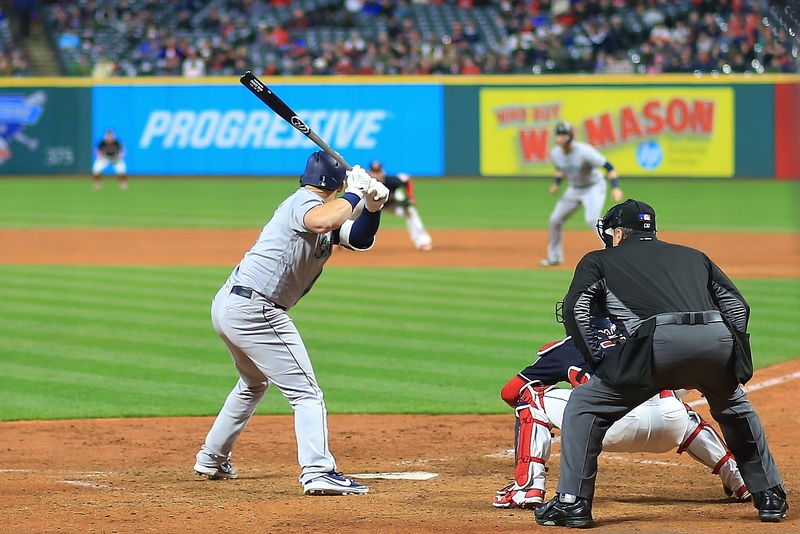
“A batter may see more than a dozen pitches every game,” Baird elaborates. “With that split second between the ball leaving the pitcher’s hand and crossing the plate, the uncertainty compounds, making it a perfect setting for magic to thrive.”
Baird, who previously reported on politics, including the impeachments of Donald Trump and the January 6 riots, found herself yearning for a subject she loved as she transitioned to writing a book. She reflected on her passions, landing on the intersection of baseball and magic, which had captivated her since childhood. “I’ve always loved magic, astrology, tarot cards, spirituality, religion,” she recalls, noting a memorable game with her father that deepened her connection to baseball.
Intriguingly, a dose of magic seemed to accompany the writing of this article: a copy of Baird’s book vanished from the reporter’s home only to reappear just before the interview. “No way!” Baird exclaimed upon hearing this. “This book is a magical object.”
The Magical Game features nine chapters mirroring the nine innings of a baseball game. Baird, a former archivist, conducted extensive research, delving into microfilm archives at the Library of Congress and interviewing experts, including John Thorn, MLB’s official historian. The book intertwines insights from psychology and anthropology, drawing parallels between the uncertainties of baseball and the rituals of South Pacific island fishermen highlighted in Bronislaw Malinowski’s studies.
“In the open sea, where it was more dangerous and the catch was uncertain, there were a lot of magic rituals involved,” Baird explains, emphasizing the shared themes of uncertainty and luck in both fishing and baseball. Thorn adds that the game’s very structure mirrors epic narratives, likening it to the hero’s journey in the Odyssey, where the player starts at home and embarks on a quest to return victorious.
As for the modern game’s evolution, Baird reflects on whether recent rule changes and the rise of sabermetrics have diminished baseball’s magic. Initially, she considered writing about the death of magic in the sport but later recognized that concerns over baseball’s evolution are as old as the game itself. “What I’ve come to believe is that the game should evolve; an unchanging thing is a dead thing,” she asserts.
On sabermetrics, Baird sees the analytical approach as illuminating the sport’s unique characteristics, revealing the magic embedded in the numbers. By the time she completed her manuscript, she found herself on a new career path, now practicing astrology alongside her journalism with Deseret News.
“It was one of my really interesting side quests,” she says, noting that she now conducts readings for clients. Whether you’re an Astros fan, a Cardinals enthusiast, or someone fascinated by the mystical, Baird’s book appeals to a wide audience. “It’s a book for people who love baseball, and for those who don’t care about baseball at all,” she assures. “It’s also for those who love magic, examined through a lens they may never have considered before.”
Note: This recap is an independently written summary based on publicly available reporting.