 COL
COL  DET
DET  NYM
NYM  NYY
NYY  PIT
PIT  CHC
CHC  BAL
BAL  TOR
TOR  SD
SD  SF
SF  LAA
LAA  WSH
WSH  KC
KC  BOS
BOS  LAD
LAD  MIA
MIA  CLE
CLE  MIN
MIN  HOU
HOU  TB
TB  CIN
CIN  MIL
MIL  PHI
PHI  ATL
ATL  CHW
CHW  STL
STL  TEX
TEX  ARI
ARI  SEA
SEA  OAK
OAK 
 TB
TB  CIN
CIN  NO
NO  DET
DET  NYJ
NYJ  TEN
TEN  BAL
BAL  IND
IND  ATL
ATL  PIT
PIT  CHI
CHI  CAR
CAR  CLE
CLE  JAX
JAX  BUF
BUF  HOU
HOU  MIA
MIA  LV
LV  GB
GB  MIN
MIN  WAS
WAS  PHI
PHI  ARI
ARI  LAC
LAC  DAL
DAL  NYG
NYG  DEN
DEN  KC
KC 

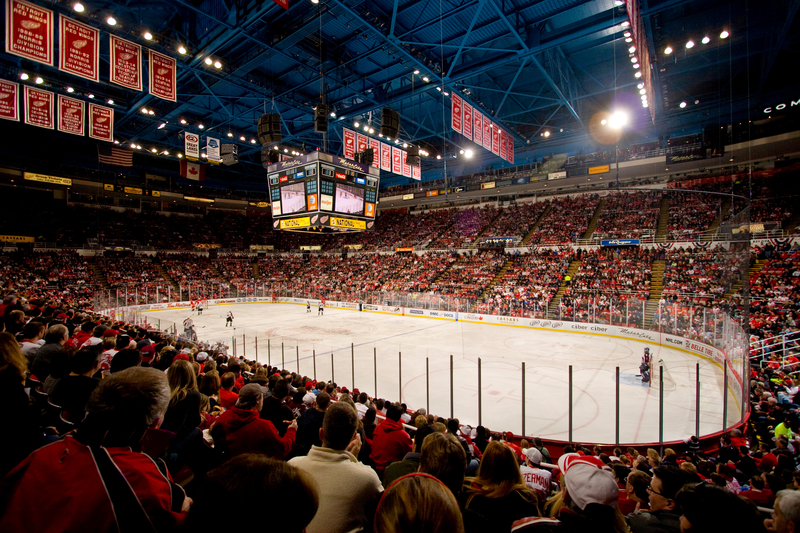
The Detroit Red Wings find themselves at a familiar crossroads as another NHL season concludes without a Stanley Cup celebration. While confetti rains down for other teams, it presents a crucial moment for the Red Wings to reflect on what distinguishes true contenders from those merely pretending to compete.
This year, the lessons come from the Western Conference champion Vegas Golden Knights and the Stanley Cup champion Carolina Hurricanes. The Golden Knights exemplify a modern approach to NHL roster construction. General Manager Kelly McCrimmon has cultivated a culture of aggressive, calculated risk-taking, frequently trading draft assets and prospects for proven players at opportune moments.
Notably, the Vegas roster is almost entirely composed of non-homegrown players, yet the team consistently emerges as a contender. They have established themselves as an attractive destination for talent, a reputation built on a commitment to winning. This culture of urgency is something the Red Wings have struggled to embody in recent years, culminating in franchise captain Dylan Larkin’s trade request, stemming from concerns over a lack of clear organizational vision for championship contention.
The Red Wings possess ample assets to emulate the aggressive strategies of the Golden Knights. However, general manager Steve Yzerman has opted for a more conservative approach, avoiding high-risk moves that could elevate the roster significantly. Instead of pursuing potential game-changers like Robert Thomas or Quinn Hughes, Yzerman has focused on more modest acquisitions, such as Justin Faulk and David Perron. While these players are solid additions, they would ideally serve as supplementary pieces on a true contender rather than the primary targets.
Vegas has thrived by going all-in, acquiring stars like Jack Eichel, Tomas Hertl, Mark Stone, and recently, Mitch Marner. Their success stems from a willingness to sell assets aggressively and time their moves with precision. Financial strategy also plays a critical role in their success. Historically, only a few players with eight-figure cap hits have won the Stanley Cup, including Eichel with Vegas, and Sergei Bobrovsky and Aleksander Barkov with Florida. Maintaining individual salaries around the $10 million mark enables organizations to develop the depth necessary for a grueling playoff run, a principle clearly demonstrated by the Hurricanes.
Carolina claimed the Stanley Cup without a single player earning over $10 million, with Sebastian Aho as the highest-paid player at $9.75 million. The team enters the offseason with nearly $12 million in available cap space, showcasing their strategic approach to roster construction. They didn’t achieve success overnight; the Hurricanes combined homegrown talent with aggressive moves for impactful players when opportunities arose.
They successfully added Nikolaj Ehlers in free agency, traded for superstar winger Mikko Rantanen, and later acquired Logan Stankoven from Dallas. Additionally, they brought in experienced players like Taylor Hall at favorable prices and rounded out their bottom six with reliable, cost-effective depth such as William Carrier, Jordan Martinook, Eric Robinson, Mark Jankowski, and the ever-reliable Jordan Staal. They also secured K’Andre Miller via trade and signed Sean Walker to enhance their defensive lineup.
Each of these moves was calculated, contributing to a roster that gradually evolved into a Stanley Cup champion. The concern in Detroit is that Yzerman’s patient and methodical approach may lack the necessary urgency to close the gap with elite teams. While additions like John Gibson and Justin Faulk are sensible for a team on the brink of contention, they cannot serve as the headline acquisitions for a franchise still striving for legitimacy.
To truly advance, the Red Wings must take calculated risks on players like Robert Thomas or Quinn Hughes—players who can propel the roster forward rather than merely maintaining the status quo. Until Detroit embraces this aggressive mindset, the disparity between the Red Wings and the NHL’s elite is likely to persist.
Note: This recap is an independently written summary based on publicly available reporting.