 PHI
PHI  BUF
BUF  FLA
FLA  OTT
OTT  ATL
ATL  ORL
ORL  MIL
MIL  WAS
WAS  MIN
MIN  MIA
MIA  CHA
CHA  BKN
BKN  CHI
CHI  TOR
TOR  UTA
UTA  MEM
MEM  IND
IND  NOP
NOP  DAL
DAL  HOU
HOU  GSW
GSW  LAL
LAL  PHX
PHX  POR
POR  SAC
SAC  LAC
LAC  NSH
NSH  BOS
BOS  NYR
NYR  TOR
TOR  SJ
SJ  ANA
ANA  NJ
NJ  PIT
PIT  LA
LA  NYI
NYI  VGK
VGK  STL
STL  WPG
WPG  DAL
DAL  MIN
MIN  CGY
CGY  CAR
CAR  EDM
EDM  UTA
UTA  SEA
SEA  DET
DET  VAN
VAN  NE
NE  CHI
CHI  CLE
CLE  PHI
PHI  DEN
DEN  OKC
OKC  MTL
MTL  CHI
CHI  TB
TB  COL
COL  NYK
NYK  BOS
BOS  DET
DET  SAS
SAS 

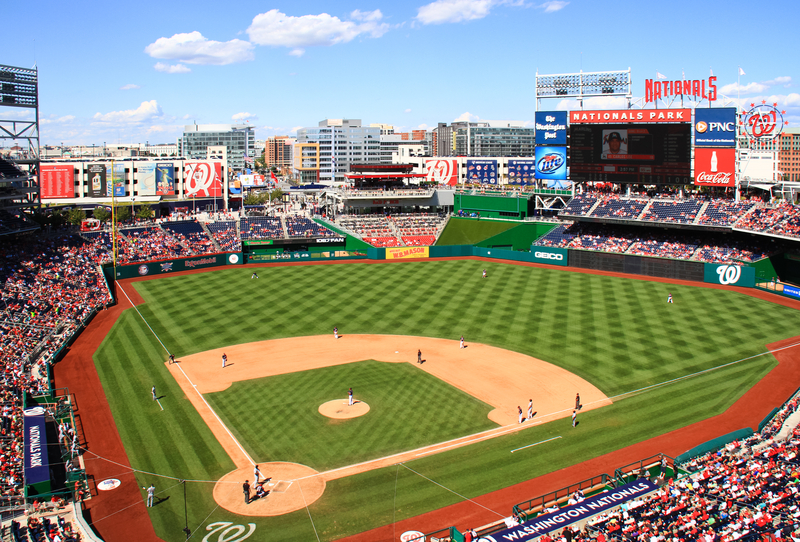
Cade Cavalli has made a significant impact in his first full MLB season, stepping into the role of the Opening Day starter with both promise and uncertainty. Following a glimpse of his potential during the previous year, he began the 2023 season with high expectations but also a history of injuries that raised questions about his durability. Despite these concerns, Cavalli has proven to be remarkably consistent, establishing himself as a stabilizing force in the Nationals’ rotation.
While Foster Griffin has garnered attention for his elite run prevention and compelling backstory, Cavalli’s reliability often goes unnoticed. He has allowed three or more earned runs in only two games this season and has maintained an ERA below 4 in every month except for one start in March. In contrast to Griffin, who faced challenges with a 4.86 ERA in May, Cavalli has posted ERA figures of 3.67 in April, 3.41 in May, 3.82 in June, and an impressive 3.10 so far in July. This level of consistency is remarkable for a pitcher who missed nearly two years due to injury.
One area where Cavalli has faced criticism, particularly early in the season, is his ability to pitch deep into games. This is a crucial aspect he must develop to take his game to the next level. Interestingly, despite having made two fewer starts than Griffin, Cavalli has logged fewer innings. The Nationals have been cautious with his workload, given that his career high in innings pitched before this year was 127.2, achieved back in 2022. Already at 110.2 innings this year, the team is carefully monitoring his performance. Manager Butera has indicated that they won’t shut him down unless they observe a significant decline in his effectiveness.
Cavalli’s inefficiency at times has also contributed to shorter outings. He tends to work deep counts, similar to MacKenzie Gore, though not as frequently. However, as the season progresses, Cavalli has shown an increasing ability to provide the length expected from a frontline starter. In fact, he completed at least six innings in six of his last seven starts, with the exception of a brief outing earlier this season that was influenced by external factors.
Since that short appearance, Cavalli has returned to form. Although he didn’t have his sharpest stuff against the Yankees, he still managed a quality start. His last two outings have been particularly impressive, showcasing a fastball consistently reaching the upper 90s and a breaking ball that has a biting action. His performance at Coors Field, where he pitched without allowing a run, exemplifies his capability.
Throughout the game, Cavalli faced some challenges with runners on base, yet he consistently delivered when it mattered most. With a fastball reaching 99 MPH and sitting comfortably at 97, he seems to have discovered another level as the season unfolds. Recently, he has also incorporated a cutter into his repertoire, transitioning from an occasional pitch to a core element of his arsenal. This 92-95 MPH cutter complements his four-seamer, which already exhibits natural cut, helping him generate weaker contact and providing hitters with a new look.
In the ever-evolving landscape of pitching, adapting to hitters’ adjustments is crucial. Cavalli has been successfully mixing his pitch usage and honing his command, leading to increased strikeouts and overall success. With a season strikeout rate of 26.6% and a walk rate of 7.1%, his numbers reflect the upward trend as he acclimates to the big leagues.
As Cavalli continues to establish himself, he has emerged as a consistently reliable number two starter for the Nationals. At nearly 28 years old, he remains a young pitcher with immense potential. If he maintains his health, Cavalli is poised to become an All-Star caliber talent, capable of starting pivotal games in the postseason for Washington.
Note: This recap is an independently written summary based on publicly available reporting.