 FLA
FLA  CHI
CHI  NYI
NYI  DAL
DAL  MTL
MTL  WPG
WPG  COL
COL  NSH
NSH  MIN
MIN  VAN
VAN  PIT
PIT  NO
NO  SF
SF  ATL
ATL  CLE
CLE  TEN
TEN  IND
IND  MIN
MIN  MIA
MIA  NYJ
NYJ  TB
TB  CAR
CAR  CIN
CIN  BAL
BAL  NYG
NYG  HOU
HOU  DEN
DEN  ARI
ARI  GB
GB  DET
DET  LA
LA  LV
LV  KC
KC  SEA
SEA  LAL
LAL  UTA
UTA  IND
IND  BKN
BKN  ORL
ORL  NYK
NYK  TOR
TOR  MIN
MIN  LAC
LAC  OKC
OKC  DET
DET  PHI
PHI  MEM
MEM  SAC
SAC  LA
LA  NYR
NYR  TOR
TOR  CGY
CGY  DET
DET  EDM
EDM  DAL
DAL  PHI
PHI  WAS
WAS  CHA
CHA  CLE
CLE  CHI
CHI  BOS
BOS  DAL
DAL  MIA
MIA  MIL
MIL  PHX
PHX  ATL
ATL  HOU
HOU  GSW
GSW  DEN
DEN 

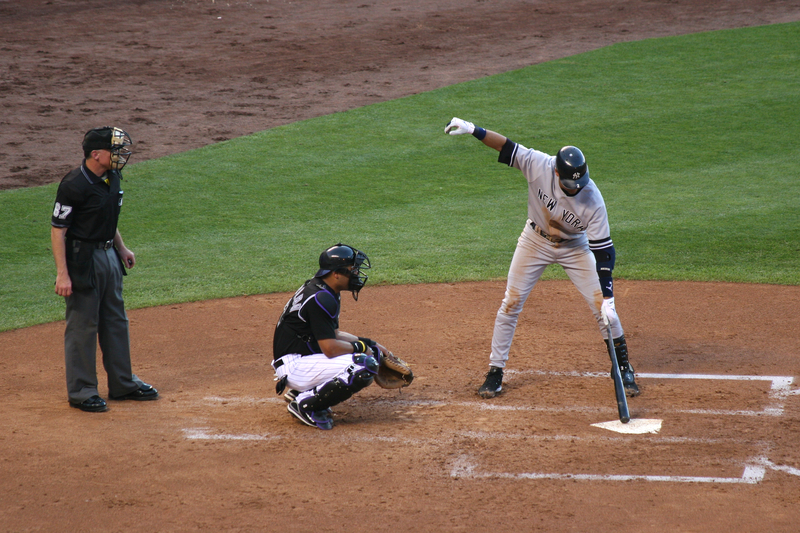
In the world of baseball, few players have sparked as much debate as Alex Rodriguez, whose career with the New York Yankees remains a topic of intense discussion. As fans reflect on his storied journey, they grapple with the question of whether his extraordinary performance in his prime outweighs the controversies that marred his legacy. Rodriguez, born on July 27, 1975, in Washington Heights, New York, played for the Yankees from 2004 to 2016, leaving an indelible mark on the franchise.
Rodriguez’s rise to stardom began during his high school years, where he showcased his talents at Christopher Columbus High School and Westminster Christian School. While his prowess on the baseball diamond earned him accolades—including a spot on the USA team at the 1992 World Junior Championship—his football skills also attracted attention, leading the University of Miami to offer him a scholarship. However, the Seattle Mariners had other plans when they selected him as the first overall pick in the 1993 MLB Draft. Just over a year later, he made his Major League debut at the age of 18, becoming the youngest player to do so in fifteen years.
In his early years with the Mariners, Rodriguez quickly established himself as one of the game’s elite players. Despite the team’s struggles, he posted impressive stats, including a .304/.372/.560 slash line and 148 home runs over four seasons. After a highly publicized offseason in 2000, Rodriguez signed a record-breaking 10-year, $252 million contract with the Texas Rangers, solidifying his status as a superstar. He continued to perform at an elite level, winning the AL MVP award in 2003 and accumulating impressive statistics.
However, the Rangers’ inability to build a competitive team around him led to a trade that shocked the baseball world. In 2004, the Yankees acquired Rodriguez, who was willing to switch positions to fill their need for a third baseman. His tenure in New York began with immediate impact, as he posted a .303/.403/.573 slash line and won two AL MVPs over his first four seasons. Yet, the postseason proved to be a different story, as Rodriguez faced criticism for his struggles in crucial moments.
The controversies surrounding Rodriguez began to mount, starting with his opt-out announcement during Game 4 of the 2007 World Series, which angered many, including the Yankees. Ultimately, he re-signed with the team for a new 10-year, $275 million deal. Yet, in February 2009, a report revealed that he was among the players who tested positive for performance-enhancing drugs in 2003, a revelation that shook the baseball community. Rodriguez admitted to his mistakes, but the fallout from the scandal continued to haunt him.
Even as he put up impressive numbers, injuries and controversies began to take their toll. By 2013, Rodriguez faced multiple challenges, including a hip surgery that sidelined him for much of the season and involvement in the Biogenesis scandal. Despite these setbacks, he made a comeback in 2015, hitting 33 home runs and joining the 3,000 Hit Club, showing flashes of his former brilliance.
Rodriguez’s career came to a close in 2016, marked by a heartfelt farewell ceremony where he received applause from fans. Since retiring, he has remained involved in baseball as an analyst, drawing both praise and criticism for his insights. Although his number 13 is still in circulation, Rodriguez has not yet received a plaque in Monument Park, reflecting the complexities of his legacy. Today, as fans remember A-Rod, they acknowledge both his incredible achievements and the controversies that defined his career, making him one of baseball’s most fascinating figures.
Note: This recap is an independently written summary based on publicly available reporting.