 TB
TB  NYY
NYY  STL
STL  PIT
PIT  MIL
MIL  PHI
PHI  WSH
WSH  DET
DET  CLE
CLE  BOS
BOS  CIN
CIN  ATL
ATL  MIA
MIA  CHC
CHC  CHW
CHW  KC
KC  NYM
NYM  TEX
TEX  ARI
ARI  COL
COL  LAA
LAA  OAK
OAK  HOU
HOU  SEA
SEA  MIN
MIN  SF
SF  SD
SD  LAD
LAD 
 PHI
PHI  BOS
BOS  DET
DET  PIT
PIT  CBJ
CBJ  BUF
BUF  NYI
NYI  NYR
NYR  FLA
FLA  CAR
CAR  EDM
EDM  WPG
WPG  TB
TB  NSH
NSH  VAN
VAN  CGY
CGY  UTA
UTA  LA
LA  VGK
VGK  SJ
SJ  TOR
TOR  BAL
BAL  TOR
TOR  OTT
OTT  MIN
MIN  DAL
DAL  ANA
ANA 

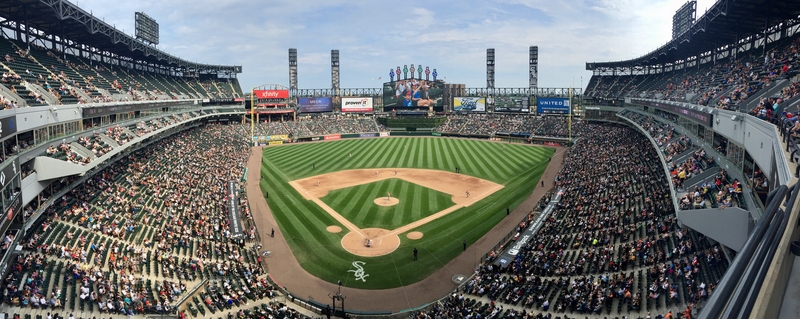
In a historic turn of events on April 24, 1901, the Chicago White Sox found themselves hosting the first major league game in American League history, thanks to rain postponing three games in other cities. A crowd of approximately 9,000 fans—though some reports suggest as many as 14,000—packed South Side Park to witness their home team defeat the Cleveland Blues, 8-2. The White Sox jumped out to a commanding lead, scoring five runs in the first inning and extending the margin to 7-0 by the end of the second inning. Remarkably, the entire game was completed in just an hour and a half.
Roy Patterson took the mound for the White Sox, earning the complete-game victory. Outfielder Billy Hoy made history by stepping up for the first at-bat in White Sox history, while Fred Hartman’s single marked the first two runs scored in American League history. Hoy, who was deaf and mute, preferred to be called by his nickname, Dummy, and utilized a series of hand signals devised by the umpires to communicate calls during the game.
Interestingly, the ceremonial first pitch was meant to be thrown by Robert Burke, special counsel to the mayor of Chicago. However, Burke declined, citing concerns that the ball might come back to him—a quirky footnote in an already memorable day.
Fast forward to 1932, the White Sox executed a trade that would prove to be less than favorable. They sent infielder Bill Cissell and right-handed reliever Jim Moore to Cleveland in exchange for utilityman Johnny Hodapp and outfielder Bob Seeds. While the deal was relatively insignificant, it appeared that the White Sox came out on the losing end, as Moore never returned to the majors, while Cissell had a stellar season. Seeds managed a solid .290 average, but Hodapp struggled, finishing with a disappointing WAR of -0.6.
In 1946, Ed Walsh, celebrated as the second-best pitcher in White Sox history by WAR, was elected to the Hall of Fame, solidifying his legendary status within the franchise.
By 1955, the White Sox were still riding the momentum of a record-setting game where they scored 29 runs. However, in a matchup against the Kansas City Athletics, starter Dick Donovan faced an uphill battle. After struggling early in the game, Donovan was reluctant to leave the mound when manager Marty Marion approached him. Concerned about his place in the rotation, Donovan needed reassurance from Marion before he finally relinquished the ball. That season, Donovan finished with an impressive 13 wins out of 17 decisions before an emergency appendectomy sidelined him, potentially costing the White Sox a shot at the pennant.
In a more recent memory from 1994, the White Sox experienced a tough loss against the Detroit Tigers, falling 7-6 after relinquishing two leads. This game was notable for the back-to-back home runs hit by Julio Franco and Robin Ventura, who both homered twice in consecutive plate appearances, showcasing their power despite the ultimate defeat.
Finally, in 2010, the White Sox achieved a remarkable feat that had never been accomplished in their history: back-to-back walk-off home runs. Alex Ríos delivered a dramatic two-out walk-off homer in the bottom of the ninth against the Seattle Mariners, capping a thrilling 5-4 victory. This followed Andruw Jones’ walk-off homer the previous day, marking a historic moment for the franchise.
Note: This recap is an independently written summary based on publicly available reporting.