 CHW
CHW  CLE
CLE  SF
SF  STL
STL  NYY
NYY  MIN
MIN  DET
DET  TOR
TOR  LAD
LAD  CIN
CIN  MIL
MIL  PIT
PIT  OAK
OAK  TB
TB  PHI
PHI  WSH
WSH  BAL
BAL  NYM
NYM  ATL
ATL  CHC
CHC  BOS
BOS  TEX
TEX  KC
KC  HOU
HOU  SD
SD  COL
COL  SEA
SEA  LAA
LAA  MIA
MIA  ARI
ARI 
 DET
DET  BUF
BUF 

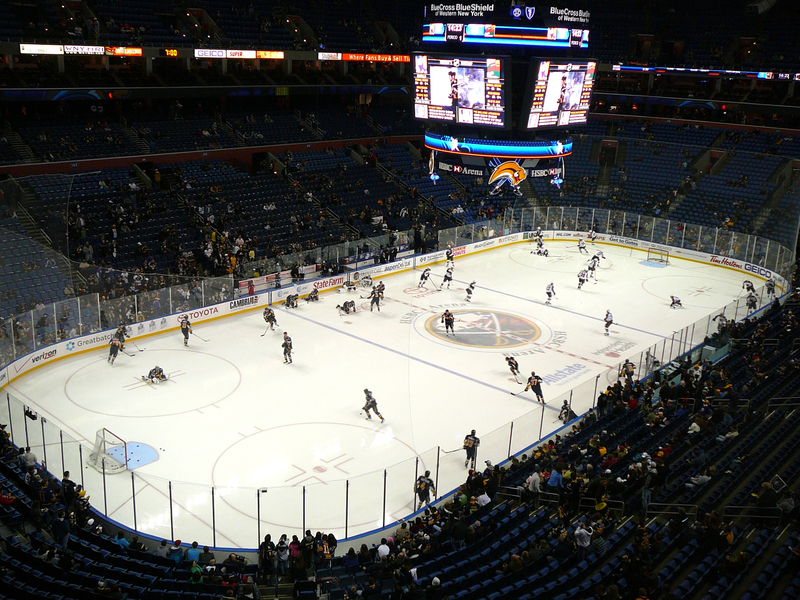
The Buffalo Sabres have finally broken their 15-year postseason drought, capturing the Atlantic Division title and advancing to the second round of the Stanley Cup Playoffs. However, following an offseason that saw key players Bowen Byram and Alex Tuch depart, replicating that success will be a formidable challenge. This week, we continue our analysis of the Atlantic Division to gauge how the other seven teams, including the Tampa Bay Lightning, are shaping up against the Sabres.
The Lightning have consistently been a high-performing team in the regular season, yet playoff success has eluded them in recent years. After winning back-to-back Stanley Cups in 2020 and 2021 and reaching the finals for a third consecutive year in 2022, Tampa Bay has faced early exits in the playoffs for four straight seasons. Last season, under the guidance of Jack Adams-winning head coach Jon Cooper, the team dealt with significant injuries to key players like defenseman Victor Hedman and center Brayden Point. Despite these challenges, they managed to finish just three points behind the Sabres for the top spot in the Atlantic. Unfortunately, their postseason run ended abruptly as they fell to the Montreal Canadiens in the first round, a surprising seven-game series that left fans and analysts alike stunned.
The Lightning’s offseason has seen some notable changes. They added Ilya Mikheyev with a four-year, $15.4 million deal and Jeffrey Viel, who signed a five-year, $12.5 million contract. Additionally, they brought in Dennis Hildeby through a trade with Toronto and secured John Carlson on a two-year, $17 million deal. However, the team also faced losses, including Darren Raddysh, who was traded to Toronto, and Oliver Bjorkstrand, who signed with the New York Rangers. The departure of Nick Paul and Corey Perry further complicates their roster dynamics.
General Manager Julien Brisebois has navigated the complexities of the salary cap in recent seasons, leveraging the appeal of a no-tax state to attract talent. Yet, the core of the Lightning, who previously claimed the Cup, is now in the latter stages of their prime. Andrei Vasilevskiy and Nikita Kucherov delivered stellar performances, winning the Vezina and Hart Trophies respectively, but both fell short of expectations during the playoffs. Hedman’s injury, limiting him to just 33 games last season, raises questions about his longevity as a future Hall-of-Famer. Still, the Lightning saw productive seasons from Jake Guentzel, Brandon Hagel, and Raddysh, who stepped up in crucial roles.
While the loss of Raddysh will be felt, the acquisition of Carlson may mitigate this impact, as he is expected to take over the power-play quarterback role if Hedman remains sidelined. Most of the Lightning’s offseason moves have been more cosmetic than transformative. Mikheyev brings speed and penalty-killing prowess, while Viel adds necessary toughness. Hildeby is anticipated to enhance the backup goalie position compared to Jonas Johansson. Ultimately, Tampa Bay’s prospects hinge on Hedman’s effectiveness and whether veterans like Point, Ryan McDonagh, Erik Cernak, and Anthony Cirelli can maintain their health.
Given the Sabres’ current forward situation following Tuch’s departure, the Lightning may have an edge in offensive firepower and fewer uncertainties. Defensively, Buffalo faces challenges with Byram’s exit, but the Lightning’s aging defensive core presents its own durability concerns. Vasilevskiy remains one of the top five goalies in the NHL, while Buffalo’s trio of netminders exceeded expectations last season — a feat they must replicate. The Lightning are poised to be a top-three team in the Atlantic, but their success will ultimately depend on health and performance as the season unfolds.
Note: This recap is an independently written summary based on publicly available reporting.