 DET
DET  CHW
CHW  MIL
MIL  BAL
BAL  BOS
BOS  TB
TB  PHI
PHI  NYM
NYM  OAK
OAK  CLE
CLE  CHC
CHC  CIN
CIN  KC
KC  PIT
PIT  TOR
TOR  TEX
TEX  ATL
ATL  HOU
HOU  WSH
WSH  STL
STL  NYY
NYY  ARI
ARI  SEA
SEA  COL
COL  MIA
MIA  SD
SD  SF
SF  LAD
LAD  MIN
MIN  LAA
LAA 
 MTL
MTL  TOR
TOR  DAL
DAL  STL
STL  WPG
WPG  EDM
EDM  CHI
CHI  MIN
MIN  VGK
VGK  LA
LA  VAN
VAN  SEA
SEA  NYI
NYI  NJ
NJ  SJ
SJ  ANA
ANA  WSH
WSH  BOS
BOS  NSH
NSH  TB
TB  UTA
UTA  COL
COL  CAR
CAR  FLA
FLA  CGY
CGY  CAR
CAR  ATL
ATL  MIN
MIN  CHI
CHI  PHI
PHI  TEN
TEN  PIT
PIT  NE
NE  GB
GB  NYJ
NYJ  CLE
CLE  TB
TB  NO
NO  BAL
BAL  CIN
CIN  HOU
HOU  JAX
JAX  DEN
DEN  LV
LV  LAC
LAC  WAS
WAS  DAL
DAL  SEA
SEA  ARI
ARI  MIA
MIA  SF
SF  IND
IND  KC
KC 

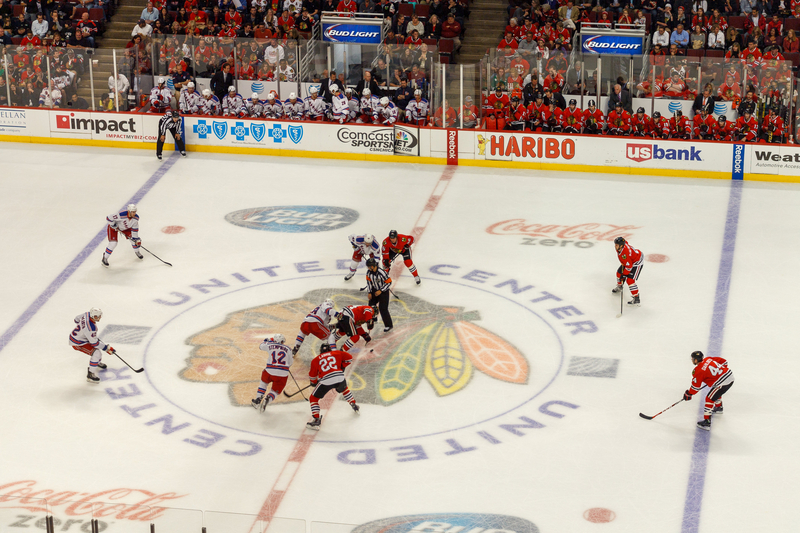
The Chicago Blackhawks find themselves at the bottom of the NHL’s Central Division in the 2025-26 season, despite an 11-point improvement from the previous year. However, the reality is stark: the Central Division is the strongest in the league, leaving the Blackhawks trailing behind their rivals.
On Thursday night, the Minnesota Wild faced off against the Dallas Stars in the sixth game of their first-round playoff series. The matchup had been characterized by a clear divide: Minnesota dominated 5-on-5, while Dallas excelled in special teams. With the Wild leading the series 3-2, they aimed to clinch victory on home ice.
The game unfolded with intense back-and-forth action until Quinn Hughes scored, pushing the Wild ahead 3-2 at 10:38 of the final period. The Wild sealed their win with two empty-net goals, finishing the game 5-2 and securing their first series victory in 11 years.
Looking ahead, the Wild will face the Presidents’ Trophy-winning Colorado Avalanche, another formidable Central Division foe. This playoff format has unfortunately led to the elimination of one of the league’s top eight teams, underscoring the competitiveness of the division.
As the Blackhawks watch the success of teams like the Wild, Stars, and Avalanche, the gap between them and true contention becomes glaringly apparent. The Wild’s dominance against Dallas highlighted just how much ground Chicago needs to cover. Even the Utah Mammoth, who advanced to the playoffs via a Wild Card spot, demonstrate a competitive edge as they battle the seasoned Vegas Golden Knights, currently down 3-2 in their series.
For the Blackhawks to elevate their status and compete with the likes of the St. Louis Blues, Nashville Predators, and Winnipeg Jets, strategic moves are essential. The team is in dire need of a top-tier defenseman akin to Cale Makar, Quinn Hughes, or Miro Heiskanen—players who are rare in the league.
While Connor Bedard shows potential to become a superstar, he cannot carry the weight alone. The supporting cast requires significant development to reach the level needed for contention. These teams not only represent the benchmarks the Blackhawks aim to surpass but also form the core of their competitive landscape.
The upcoming second-round series between the Wild and Avalanche promises to be thrilling. Colorado has been on a collision course with either Dallas or Minnesota since American Thanksgiving, and the showdown is finally upon us.
What lies ahead for the Blackhawks? The path forward involves patience and commitment to player development, while also remaining vigilant for opportunities in trade or free agency. Currently, Chicago’s strengths lie in its promising farm system, available cap space, and successful player development initiatives. Over time, these elements will coalesce, gradually allowing the Blackhawks to compete with the elite teams in their division.
For now, however, the Blackhawks are not quite there, and the ongoing Stanley Cup playoffs are illustrating why.
Note: This recap is an independently written summary based on publicly available reporting.