 CLE
CLE  CHW
CHW 
 PHI
PHI  OTT
OTT  UTA
UTA  BOS
BOS  DAL
DAL  BUF
BUF  NSH
NSH  MTL
MTL  MIN
MIN  TB
TB  VAN
VAN  CAR
CAR  CHI
CHI  NYI
NYI  SJ
SJ  STL
STL  COL
COL  CGY
CGY  TOR
TOR  VGK
VGK  TB
TB  DAL
DAL  BOS
BOS  CLE
CLE  NOP
NOP  MIA
MIA  PHI
PHI  BKN
BKN  WAS
WAS  NYK
NYK  ATL
ATL  SAS
SAS  SAC
SAC  LAL
LAL  SEA
SEA  DET
DET  NYR
NYR  WSH
WSH  PIT
PIT  CBJ
CBJ  ANA
ANA  WPG
WPG  HOU
HOU  DAL
DAL  MEM
MEM  CHI
CHI 

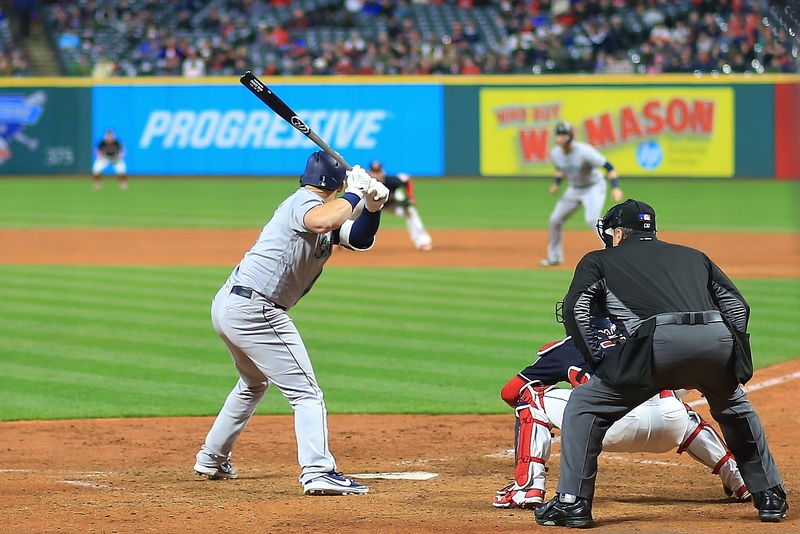
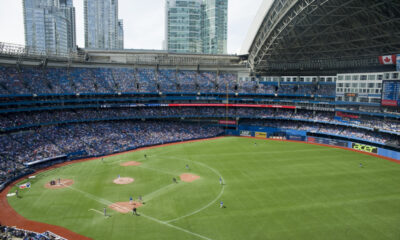
As the 2026 MLB Draft approaches, the Toronto Blue Jays are gearing up for a pivotal moment that could shape the future of their franchise. With a draft strategy that hinges on their current farm system, the Jays are evaluating their position and the talent pool available this year.
Recent updates from Baseball America have placed the Blue Jays’ farm system at 18th overall, while Fangraphs has introduced a new ranking methodology, slotting the team at 20th. This evaluation still includes standout prospect Trey Yesavage, whose potential removal could see the Jays drop further into the mid-20s. Meanwhile, MLB.com had them ranked 15th before the season commenced, again factoring in Yesavage. Despite these rankings, the organization remains above the truly struggling systems like those of San Diego, Houston, or Philadelphia.
The Blue Jays’ ranking reflects a combination of factors, including a string of later draft picks—Jojo Parker being their only selection higher than 19th in the last five seasons—as well as the impact of buying at the trade deadline and the penalties associated with qualifying offer free agents. The emergence of prospects like Arjun Nimmala and Parker provides a solid foundation, while pitchers such as Johnny King, Nolan Perry, and Gage Stanifer suggest that their investment in the Dunedin pitching lab is starting to pay dividends. However, the system lacks depth, and while they have several players with top 100 potential, none are firmly among the top 50.
Looking forward, the Blue Jays can expect their impact prospects to be a year or two away from contributing significantly at the major league level. Role players like Sean Keys and Yohendrick Pinango are expected to make their mark in 2026, with Jake Bloss being a potential exception.
This year’s draft class is notably deep, featuring a clear top three: UCLA shortstop Roch Cholowsky, Texas high school shortstop Grady Emerson, and Georgia Tech catcher Vahn Lackey. Following this trio is a competitive group of six to seven names, including Mississippi high school outfielder Eric Booth Jr., Florida prep shortstop Jacob Lombard, Florida prep lefty Gio Rojas, LSU outfielder Derek Curiel, Kentucky shortstop Tyler Bell, Georgia Tech outfielder Drew Burress, and UC Santa Barbara right-handed pitcher Jackson Flora. These players are expected to be selected in the 4-12 range, creating a flat and unpredictable tier from the early teens to the early 40s.
This unpredictability bodes well for the Blue Jays, as they hold the 39th pick. There’s a higher likelihood than usual that a player who would typically be a first-round talent might still be available when they select. While mock drafts typically inform predictions about player selection, this year’s landscape makes it challenging to pinpoint specific targets for the Jays at this juncture. Instead, the focus should be on understanding the types of prospects likely to fall within the 25-50 range, providing the Blue Jays with a wealth of options as they prepare for the draft.
Note: This recap is an independently written summary based on publicly available reporting.