 BUF
BUF  TOR
TOR  NYI
NYI  OTT
OTT  SEA
SEA  TB
TB  VAN
VAN  FLA
FLA  NYR
NYR  NJ
NJ  PHI
PHI  DET
DET  WPG
WPG  CHI
CHI  SJ
SJ  NSH
NSH  STL
STL  MIN
MIN  UTA
UTA  EDM
EDM  CGY
CGY  VGK
VGK  SEA
SEA  DEN
DEN  TOR
TOR  NYK
NYK  OKC
OKC  HOU
HOU  PIT
PIT  COL
COL  BOS
BOS  ANA
ANA  MIA
MIA  ORL
ORL  BOS
BOS  PHI
PHI  DET
DET  MIL
MIL  IND
IND  ATL
ATL  DAL
DAL  SAC
SAC  SAS
SAS  CHA
CHA  MEM
MEM  WAS
WAS  NOP
NOP  MIN
MIN  CHI
CHI  POR
POR  GSW
GSW  UTA
UTA  PHX
PHX  DEN
DEN  LAL
LAL  WSH
WSH  CAR
CAR  MTL
MTL  CBJ
CBJ  DAL
DAL  LA
LA 

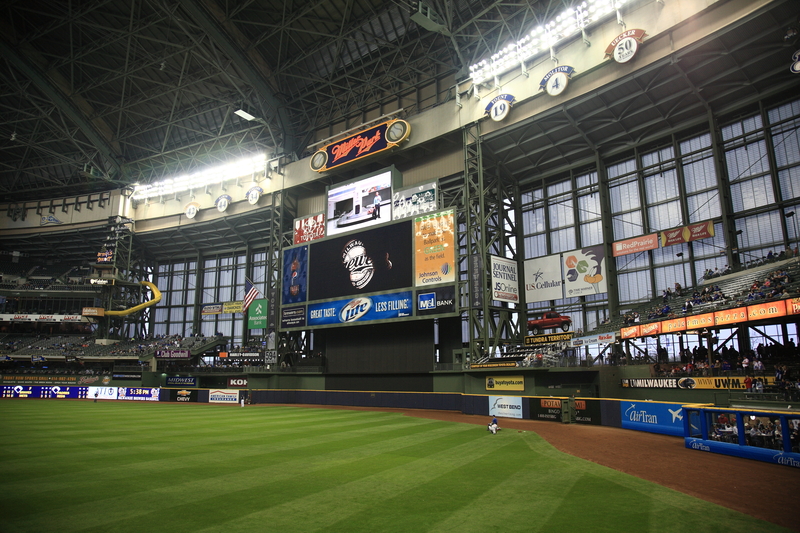
The Milwaukee Brewers are at it again, defying the odds and the expectations that come with being a small-market team. Critics have labeled them as too cheap or too foolish for trading away their ace and a young star third baseman, but the Brewers remain unfazed. Fans may be gearing up for disappointment, but the team’s outlook is anything but bleak.
“Honestly, we just don’t care,” said Brewers outfielder Christian Yelich, reflecting on the constant scrutiny the team faces. Sal Frelick, another outfielder, echoed this sentiment, noting, “It’s funny to us, because we don’t feel like we’re underdogs. We know we didn’t go out and spend a lot of money, so that can kind of give you the underdog edge. But it’s still a little weird to us because we win every year.” Their track record speaks for itself; the Brewers have dominated the NL Central over the past eight years, clinching three consecutive division titles and averaging 92.6 victories per season since 2020.
Despite losing ace Freddy Peralta and third baseman Caleb Durbin, the Brewers continue to embrace their underdog status. General Manager Matt Arnold stated, “If people want to overlook us, that’s fine. Really, we embrace being underdogs here.” While their rivals, the Chicago Cubs, splurged $209 million in free agency, the Brewers spent a mere $6.5 million, filling their vacancies with cost-effective signings.
Brandon Woodruff, the longest-tenured Brewer, acknowledges the team’s unconventional approach, stating, “We’re not supposed to be doing what we’re doing with our payroll and our market. You see what we spend, and it’s like how are we going to win again? Then, you think, well, we did that last year without spending; we can do it again.” The Brewers have consistently proved naysayers wrong, with their playoff appearances underscoring the idea that success doesn’t always correlate with a hefty payroll.
As All-Star closer Trevor Megill points out, the Brewers exemplify that a team doesn’t need to spend excessively to win. “Our team is a great example of why you don’t need a salary cap. Get creative. There’s more than one way to win a baseball game,” he said. This philosophy is especially relevant as the Brewers navigate a landscape dominated by teams with deep pockets.
While the Dodgers may flaunt their financial prowess, the Brewers have found ways to succeed with a much smaller payroll. This season, only two Brewers players are earning over $10 million, while half of the Dodgers’ roster is making that much. Yet, as Joey Ortiz, a Brewers shortstop, notes, “The biggest payroll doesn’t mean that you’re going to win ballgames, and the lowest payroll doesn’t mean that you’re going to be the worst team in the league.”
The Brewers’ recent trades, including the controversial move of sending Peralta to the Mets, highlight the team’s commitment to future success. Manager Pat Murphy reflected on the impact of losing Durbin, who embodied the team’s gritty ethos. “He was as excited about getting on base by a hit-by-pitch as he was getting a line drive hit. He was all about just getting on base for us,” Murphy said. The Brewers are betting on their ability to build a competitive roster through strategic trades and acquisitions.
As the season progresses, the Brewers continue to focus on their culture and teamwork. “Everyone gets it here,” Woodruff said, emphasizing the unity within the clubhouse. With a blend of talent, resilience, and a chip on their shoulder, the Brewers are ready to prove once again that they can compete with the best, irrespective of budget constraints.
With NL Central flags to show for their efforts, the Brewers have established themselves as a formidable force in Major League Baseball. As they gear up for another season, fans can expect this small-market team to continue rewriting the narrative.
Note: This recap is an independently written summary based on publicly available reporting.