 CHW
CHW  CLE
CLE  NYY
NYY  TB
TB 
 PHI
PHI  TB
TB  OTT
OTT  BOS
BOS  WPG
WPG  PIT
PIT  SJ
SJ  DAL
DAL  ATL
ATL  NO
NO  MEM
MEM  ATL
ATL  PHX
PHX  DET
DET  NYK
NYK  PHI
PHI  MIN
MIN  MIL
MIL  LAL
LAL  SAC
SAC  LAD
LAD  ATL
ATL  MIL
MIL  SD
SD  CAR
CAR  MTL
MTL  NSH
NSH  TOR
TOR  DET
DET  UTA
UTA  NJ
NJ  MIN
MIN  BUF
BUF  NYI
NYI  NYR
NYR  STL
STL  CHI
CHI  VGK
VGK  SEA
SEA  FLA
FLA  LA
LA  BKN
BKN  CHA
CHA  NOP
NOP  OKC
OKC  DEN
DEN  UTA
UTA  GSW
GSW 

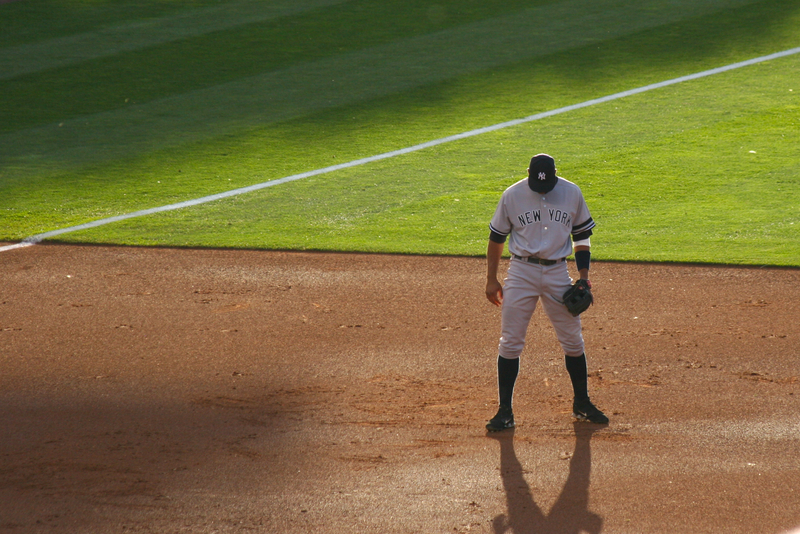
In the rich tapestry of the New York Yankees’ history, few players stand out like George Moriarty. This unique figure, who played for the team between 1906 and 1908, blended a laid-back persona off the field with a fierce competitive spirit in the clubhouse. Moriarty’s journey through baseball serves as a reminder that the sport is not just about the superstars; it’s also about the colorful characters that make the game captivating.
Born on July 7, 1885, in Chicago, Illinois, George Joseph Moriarty was destined for baseball from a young age, growing up in a family connected to the sport. He dropped out of school to chase his dreams, entering the professional ranks at just 16 years old. His early career began in the semi-professional leagues, where he played for teams like the Davenport River Rats and the Rock Island Islanders, eventually making his mark in the Three-I League.
By 1903, Moriarty’s skills had caught the attention of the Chicago Cubs, but his initial stint with the team was rocky. He debuted nervously, ending up with an 0-for-5 performance. Despite this shaky start, he earned another chance the following spring, but continued to struggle. A subsequent move to the Toledo Mud Hens allowed him to showcase his talents more effectively, where he batted an impressive .295 and became known for his scrappy demeanor both on and off the field.
Moriarty’s contract was sold to the New York Highlanders (now the Yankees) in 1906, where he played a versatile role, covering multiple positions. In his first season, he recorded a .234 batting average while appearing in 65 games. By 1907, he stepped into a full-time utility player role, improving his numbers to a .277 average and demonstrating his ability to adapt and excel in various positions.
However, the 1908 season didn’t go as well for Moriarty, as his performance declined alongside the team’s struggles, finishing with a .236 average. Despite the Highlanders’ last-place finish, good fortune awaited Moriarty as he was sold to the Detroit Tigers, where he transitioned into a more stable role as the team’s third baseman. His time with the Tigers saw him become a key player, contributing to their pennant win in 1909, although they fell short in the World Series.
Known for his fiery spirit, Moriarty’s reputation as a fighter grew during his tenure with Detroit. One infamous incident involved a challenge from legendary player Ty Cobb, which Moriarty met with humor and bravado. He continued to play for the Tigers until 1915, when he transitioned into a player-coach role before ultimately leaving the team.
In 1916, he briefly joined the Chicago White Sox before finding his true calling in umpiring, which he pursued from 1917 to 1940. Moriarty’s umpiring career was notable for his commitment to fairness, exemplified by his defense of Hank Greenberg during the 1935 World Series when he ejected players for antisemitic slurs. His legacy as an umpire included five World Series and the second-ever MLB All-Star Game in 1934.
After retiring from umpiring, Moriarty remained involved in baseball as a scout and writer. He spent his later years in Miami, where he passed away on April 8, 1964, at the age of 79. His life story is a testament to the diverse characters that have shaped the game of baseball, leaving an indelible mark on the sport.
Note: This recap is an independently written summary based on publicly available reporting.