 PHI
PHI  ATL
ATL  CHW
CHW  HOU
HOU  BOS
BOS  NYY
NYY  CHC
CHC  SD
SD 
 PIT
PIT  PHI
PHI  NYI
NYI  TOR
TOR  LA
LA  COL
COL  BUF
BUF  CBJ
CBJ  NJ
NJ  TB
TB  NYR
NYR  MIN
MIN  NSH
NSH  SEA
SEA  CGY
CGY  CHI
CHI  UTA
UTA  FLA
FLA  SJ
SJ  EDM
EDM  VAN
VAN  PIT
PIT  CLE
CLE 

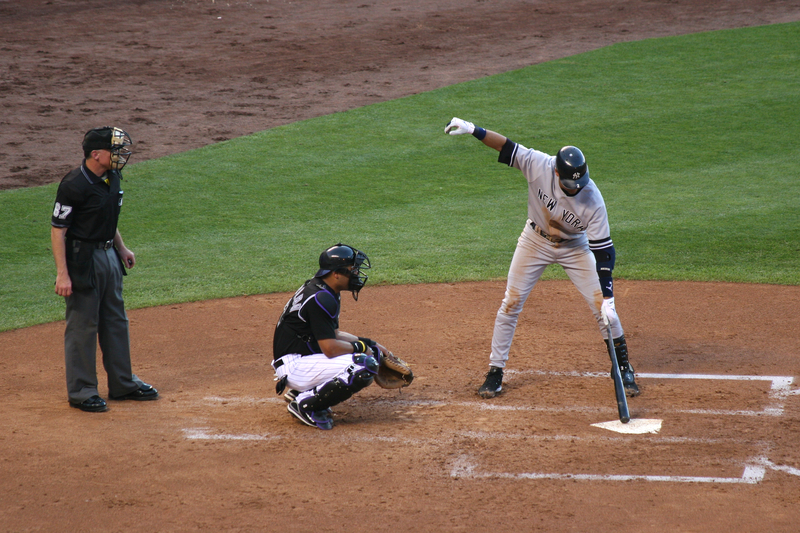
In the landscape of Major League Baseball, being an all-glove, no-hit player often relegates individuals to the sidelines of superstardom. Yet, some manage to carve out a place in baseball lore by seizing the moment when it counts the most. Bucky Dent, for instance, may have never posted an OPS above .700 during his time with the Yankees, but his iconic three-run home run in 1978 secured the American League pennant and sent the Boston Red Sox packing. Players like Dent are rare exceptions; most fade into obscurity, and some become symbols of their team’s struggles. Such was the fate of Jerry Kenney.
Born Gerald Tennyson Kenney on June 30, 1945, in St. Louis, Missouri, and raised in Beloit, Wisconsin, he initially excelled in basketball, earning All-State honors in high school. However, Kenney chose to pursue baseball and signed with the Yankees as an amateur free agent in the 1963-64 offseason. He quickly ascended through the minor leagues, making his big league debut in 1967, where he impressed with a .310 batting average over 74 plate appearances.
Kenney’s promising career faced an interruption due to a mandatory stint in the Navy during the Vietnam War. Fortunately, his service was cut short, and by November 1968, he was cleared to return for the 1969 season. Just as he was set to rejoin the Yankees, news broke that Mickey Mantle would retire on March 1, 1969. The media, eager for a narrative, dubbed Kenney as the potential heir to Mantle, setting the stage for unrealistic expectations.
However, Kenney struggled to meet those lofty standards. In his four seasons with the Yankees following his military service, he never hit more than four home runs, and his batting average fell short of .270. Yet, modern metrics reveal a more nuanced picture of his abilities. In 1971, Kenney posted a 103 wRC+ over 120 games, buoyed by a commendable 14.2-percent walk rate and a .368 on-base percentage. Defensively, he shined, recording 42 Fielding Runs Above Average from 1969 to 1972, despite appearing in only 440 of the Yankees’ 642 games during that span. His defensive prowess contributed to a 6.8 WAR, illustrating that while he may not have been a star, he was far from a liability.
Despite Kenney’s contributions, the Yankees decided to part ways with him after the 1972 season, trading him to Cleveland as part of a four-player package for Graig Nettles. This trade raises eyebrows, as Nettles had already established himself as one of the league’s elite players, boasting an impressive 16.2 WAR from 1970 to 1972. The decision to deal Kenney, along with Charlie Spikes, John Ellis, and Rusty Torres, for Nettles and Jerry Moses seems baffling in retrospect. Imagine the uproar if a modern-day team were to trade a star like José Ramírez for a package of lesser players.
Kenney’s tenure in the majors concluded quietly, with just five games played for Cleveland in 1973. In the years following his career, his name, alongside Horace Clarke’s, became synonymous with the Yankees’ postseason drought that lasted from 1965 to 1975. However, it is essential to remember that the Yankees’ struggles were not solely Kenney’s fault; he was merely one piece of a larger puzzle.
As we celebrate Jerry Kenney on his birthday, let’s shift the narrative from what he wasn’t to what he was: an elite defender and a valuable role player who donned the Yankees’ uniform with pride. Happy Birthday, Jerry Kenney!
Note: This recap is an independently written summary based on publicly available reporting.