 DET
DET  CHW
CHW  MIL
MIL  BAL
BAL  BOS
BOS  TB
TB  PHI
PHI  NYM
NYM  OAK
OAK  CLE
CLE  CHC
CHC  CIN
CIN  KC
KC  PIT
PIT  TOR
TOR  TEX
TEX  ATL
ATL  HOU
HOU  WSH
WSH  STL
STL  NYY
NYY  ARI
ARI  SEA
SEA  COL
COL  MIA
MIA  SD
SD  SF
SF  LAD
LAD  MIN
MIN  LAA
LAA 
 MTL
MTL  TOR
TOR  DAL
DAL  STL
STL  WPG
WPG  EDM
EDM  CHI
CHI  MIN
MIN  VGK
VGK  LA
LA  VAN
VAN  SEA
SEA  NYI
NYI  NJ
NJ  SJ
SJ  ANA
ANA  WSH
WSH  BOS
BOS  NSH
NSH  TB
TB  UTA
UTA  COL
COL  CAR
CAR  FLA
FLA  CGY
CGY  CAR
CAR  ATL
ATL  MIN
MIN  CHI
CHI  PHI
PHI  TEN
TEN  PIT
PIT  NE
NE  GB
GB  NYJ
NYJ  CLE
CLE  TB
TB  NO
NO  BAL
BAL  CIN
CIN  HOU
HOU  JAX
JAX  DEN
DEN  LV
LV  LAC
LAC  WAS
WAS  DAL
DAL  SEA
SEA  ARI
ARI  MIA
MIA  SF
SF  IND
IND  KC
KC 

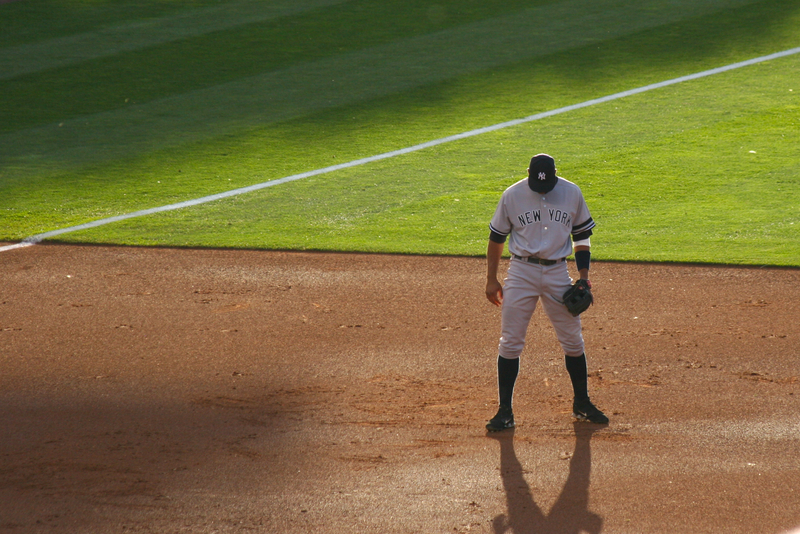
Lou Gehrig, a name synonymous with excellence in baseball, transcends the sport itself. Known as the “Iron Horse,” Gehrig’s legacy is not solely defined by his remarkable achievements on the field but also by his courageous battle with amyotrophic lateral sclerosis (ALS), a disease that has come to bear his name. As we celebrate his birthday today, we reflect on the life of a player whose impact continues to resonate beyond the diamond.
Born Henry Louis Gehrig on June 19, 1903, in New York City, he was the son of German immigrants Heinrich and Christina. Lou was the only one of their four children to survive past infancy, and he grew up in a household where German was spoken. His mother, a maid, was the primary breadwinner, while his father struggled with alcoholism and epilepsy. This close bond with his mother led Lou to refer to her as his “best pal,” a testament to their strong relationship.
Although Gehrig’s parents initially disapproved of his passion for baseball, their perspective changed as they recognized his immense talent. After leading his high school team to the New York City championship, Gehrig made headlines by hitting a grand slam at Wrigley Field, a feat that would have been impressive even for a major leaguer. Despite his burgeoning baseball career, his family hoped he would pursue a more stable profession, prompting him to enroll at Columbia University, where he excelled in both baseball and football.
It was during his college years that legendary Yankees scout Paul Krichell discovered him. Krichell was captivated by Gehrig’s performance and convinced Yankees GM Ed Barrow that he had found the “next Babe Ruth.” On April 30, 1923, Gehrig signed with the Yankees, a decision that would forever alter the course of baseball history.
Initially, Gehrig had limited opportunities, playing just 23 games in his first two seasons. However, he showcased his potential with a remarkable 209 OPS+ in 42 plate appearances and impressed in the minors. His big break came on June 2, 1925, when he was given a chance to start at first base. With Wally Pipp sidelined, Gehrig made the most of the opportunity, going 3-for-5, and would remain a fixture in the Yankees’ lineup for the next 14 years.
Gehrig’s ascent was meteoric. By the late 1920s, he was a central figure in the Yankees’ dominance, contributing to championships in 1927, 1928, 1932, 1936, 1937, and 1938. His statistics during this period were staggering, with a batting average of .343, 472 home runs, and 1,913 RBIs, solidifying his status as one of the game’s all-time greats. Notably, on June 3, 1932, he became the first player in American League history to hit four home runs in a single game, a record that remains unmatched among Yankees.
Gehrig’s legendary streak of 2,130 consecutive games played remains one of the most celebrated records in sports history. His unwavering commitment to the game was remarkable, as he never missed a game from 1925 until early 1939, defying the physical toll that such a streak would typically exact on an athlete.
However, in 1938, whispers of trouble began as Gehrig noticed a decline in his performance. Despite his efforts to regain form, he ultimately sought medical advice and was diagnosed with ALS, a devastating revelation that forced him to retire. The Yankees honored him with Lou Gehrig Appreciation Day on July 4, 1939, where he delivered a heartfelt speech that has become legendary. “I consider myself the luckiest man on the face of the earth,” he proclaimed, highlighting his gratitude for the support and love he received throughout his life.
After his retirement, Gehrig was appointed as a New York City Parole Commissioner, a role he held until his untimely passing on June 2, 1941, just shy of his 38th birthday. His widow, Eleanor Gehrig, dedicated her life to raising awareness for ALS and preserving Lou’s memory, stating, “I would not have traded two minutes of the joy and grief with that man for two decades of anything with another.”
Lou Gehrig’s legacy endures not only as a baseball icon but also as a symbol of strength and perseverance in the face of adversity. His story continues to inspire generations, reminding us of the profound impact one individual can have on a community, a sport, and the world.
Note: This recap is an independently written summary based on publicly available reporting.