 ANA
ANA  PHI
PHI  LA
LA  NJ
NJ  SJ
SJ  BOS
BOS  NYR
NYR  OTT
OTT  NSH
NSH  PIT
PIT  BUF
BUF  WSH
WSH  VGK
VGK  CBJ
CBJ  CAR
CAR  STL
STL  TOR
TOR  EDM
EDM  TB
TB  UTA
UTA  DET
DET  CGY
CGY  MIN
MIN  SEA
SEA  MIA
MIA  CHA
CHA  BKN
BKN  CLE
CLE  MIL
MIL  PHI
PHI  WAS
WAS  CHI
CHI  SAS
SAS  DAL
DAL  HOU
HOU  ATL
ATL  NOP
NOP  DEN
DEN  GSW
GSW  PHX
PHX  FLA
FLA  CHI
CHI  NYI
NYI  DAL
DAL  MTL
MTL  WPG
WPG  COL
COL  VAN
VAN  PIT
PIT  NO
NO  SF
SF  ATL
ATL  CLE
CLE  TEN
TEN  IND
IND  MIN
MIN  MIA
MIA  NYJ
NYJ  TB
TB  CAR
CAR  CIN
CIN  BAL
BAL  NYG
NYG  HOU
HOU  DEN
DEN  ARI
ARI  GB
GB  DET
DET  LA
LA  LV
LV  KC
KC  SEA
SEA  LAL
LAL  UTA
UTA  IND
IND  ORL
ORL  NYK
NYK  TOR
TOR  MIN
MIN  LAC
LAC  OKC
OKC  DET
DET  MEM
MEM  SAC
SAC 

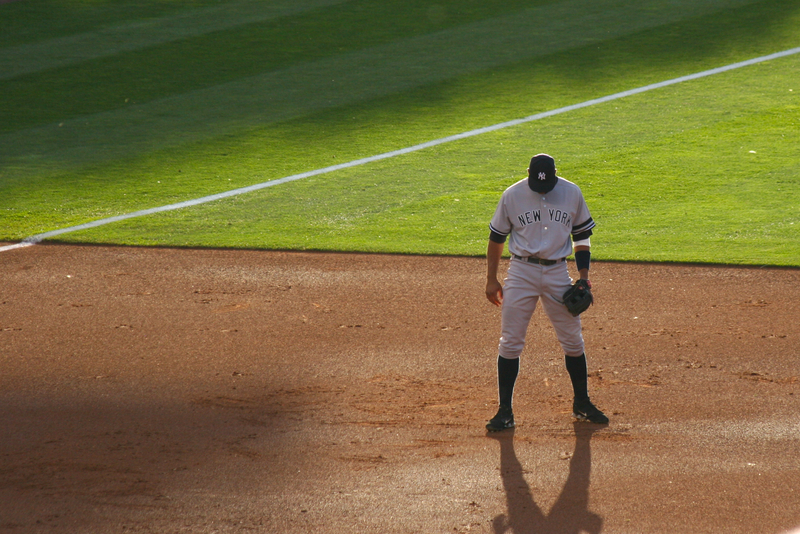
In the annals of baseball history, few stories are as captivating as that of Samuel Pond “Sad Sam” Jones, a pivotal figure in the New York Yankees’ first dynasty. Acquired through a series of trades with the Boston Red Sox, Jones emerged as a vital contributor during a transformative era for the Yankees, one that began with their 1923 championship.
Born on July 26, 1892, in Woodsfield, Ohio, Jones’s journey to the majors is steeped in charm and nostalgia. Legend has it that he honed his pitching skills by tossing potatoes with his brother on their grandfather’s farm, an unconventional training regimen that speaks to the simpler times of early baseball.
Jones’s professional career had a rocky start, highlighted by a brief stint with the Zanesville Flood Sufferers in 1913, where homesickness prompted his release. However, he soon caught the attention of scouts while playing for the Portsmouth (OH) Cobblers, leading to a contract with the Cleveland Naps. By 1915, he had solidified his place in the majors, appearing in 48 games for Cleveland.
In a significant trade, Jones was sent to the Red Sox in exchange for future Hall of Famer Tris Speaker, although he was viewed primarily as a secondary piece in the deal. After a shaky start in Boston, 1918 proved to be a breakout year for Jones. The Red Sox initially misplaced his contract, mistakenly placing him on the retired list, but once resolved, he went on to post a remarkable 16-5 record, leading the league with a .725 winning percentage and a 2.25 ERA. His contributions helped the Red Sox clinch the World Series title that year, marking the team’s last championship for nearly a century.
As the Red Sox began to dismantle their championship roster, Jones found himself traded to the Yankees in December 1921, alongside Bullet Joe Bush and shortstop Everett Scott. This trade would prove to be a boon for the Yankees, as all three players played crucial roles in the team’s success. It was during this time in New York that Jones earned his nickname, “Sad Sam,” due to his seemingly downcast demeanor on the field, a perception he attributed to his hat-wearing style rather than any actual sadness.
Jones quickly became a valuable asset to the Yankees, contributing to their American League championship in 1922. Though his World Series appearance that year was limited to two scoreless innings, he played a more prominent role in the following season, achieving an impressive 21-8 record. Notably, on September 4, he threw a no-hitter against the Philadelphia Athletics, allowing just one walk and one error, yet curiously not striking out a single batter.
This no-hitter marked a significant milestone in franchise history, being the second in the Yankees’ record books. In the 1923 World Series, Jones started Game 3, yielding only one run over eight innings, but the Yankees fell short in that match. However, he redeemed himself in Game 6, coming out of the bullpen to pitch two scoreless innings, effectively securing the Yankees’ first World Series championship.
Jones continued to pitch for the Yankees for three more seasons, contributing solid performances before being traded to the St. Louis Browns ahead of the 1927 season. He spent the next nine years with the Browns, Washington Senators, and Chicago White Sox, maintaining a respectable level of performance throughout his career. In total, Jones accumulated a noteworthy 39.0 fWAR and 42.6 rWAR over his 22 seasons in the big leagues.
After retiring from baseball, Jones returned to Woodsfield, Ohio, where he lived until his death in 1966, just shy of his 74th birthday. The Yankees owe a debt of gratitude to the Red Sox for providing them with a significant portion of their first championship team, and Sad Sam Jones was undoubtedly an integral part of that legacy.
Note: This recap is an independently written summary based on publicly available reporting.