 CLE
CLE  CHW
CHW 
 PHI
PHI  OTT
OTT  UTA
UTA  BOS
BOS  DAL
DAL  BUF
BUF  NSH
NSH  MTL
MTL  MIN
MIN  TB
TB  VAN
VAN  CAR
CAR  CHI
CHI  NYI
NYI  SJ
SJ  STL
STL  COL
COL  CGY
CGY  TOR
TOR  VGK
VGK  TB
TB  DAL
DAL  BOS
BOS  CLE
CLE  NOP
NOP  MIA
MIA  PHI
PHI  BKN
BKN  WAS
WAS  NYK
NYK  ATL
ATL  SAS
SAS  SAC
SAC  LAL
LAL  SEA
SEA  DET
DET  NYR
NYR  WSH
WSH  PIT
PIT  CBJ
CBJ  ANA
ANA  WPG
WPG  HOU
HOU  DAL
DAL  MEM
MEM  CHI
CHI  NJ
NJ  EDM
EDM  FLA
FLA  LA
LA  LAC
LAC  TOR
TOR  IND
IND  DET
DET  MIN
MIN  GSW
GSW  PHX
PHX 

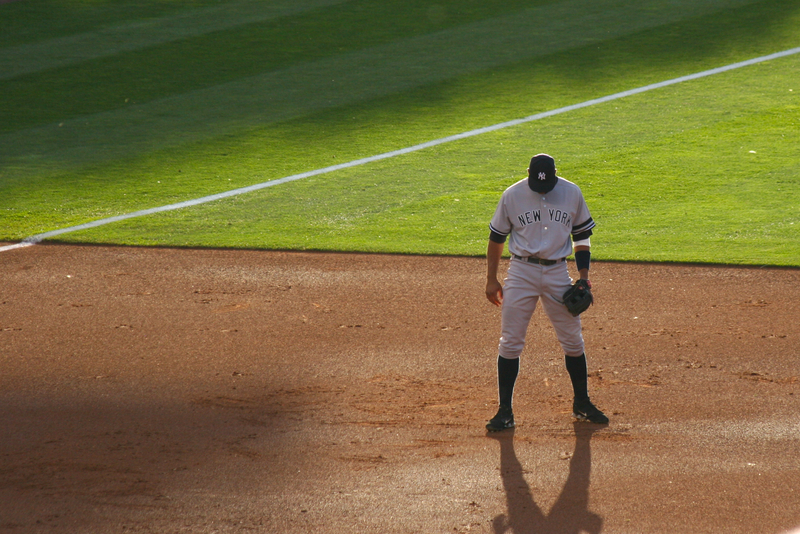
Tommy John’s name resonates throughout the baseball world, often evoking discussions not only of his impressive career but also the groundbreaking surgery that carries his name. While many players are remembered solely for their on-field achievements, John’s legacy is intertwined with a medical procedure that has transformed the lives of countless pitchers. Despite the overshadowing of his accomplishments by the surgery, it is important to recognize that John was not only a pioneer in sports medicine but also an exceptional pitcher who excelled for nearly three decades.
Born on May 22, 1943, in Terre Haute, Indiana, Thomas Edward John made his Major League debut at just 20 years old with the Cleveland Indians in 1963. His early years in Cleveland were brief but marked by promise. A pivotal moment in his career came when he was traded to the Chicago White Sox, where he had his breakout season in 1968, achieving a sub-2 ERA and earning his first All-Star selection.
In a significant trade prior to the 1972 season, John moved to the Los Angeles Dodgers in exchange for Dick Allen, who would go on to win the MVP award that same year. John’s time in L.A. was marked by consistency, as he pitched over 400 innings with a solid 3.00 ERA in his first two seasons. However, his career took an unexpected turn in 1974 when he suffered a severe elbow injury that many thought would end his career. After being advised that he had torn his UCL, he was fortunate to be treated by Dodgers’ team doctor Frank Jobe, who performed the revolutionary reconstructive surgery that would later be known as Tommy John surgery.
The surgery was groundbreaking, as it had never been done on an athlete before, but it allowed John to return to the mound and continue his career. Remarkably, he pitched for 14 more seasons after the procedure, proving that he could still compete at a high level. His return in 1976 marked the beginning of a remarkable second act in his career, during which he pitched three more seasons with the Dodgers, logging over 200 innings each year and finishing second in Cy Young voting in 1977.
John’s arrival in New York in 1979 was met with immediate impact. That year, he set a career high with 276.1 innings pitched, achieving a sub-3 ERA and notching his first 20-win season. His performance quelled any doubts about his recovery from surgery, and he continued to shine throughout the 1980s, earning his fourth All-Star selection and winning another 22 games in 1980.
Even as he approached his 40s, John remained a formidable presence on the mound, exemplifying durability and skill. In 1981, he posted a remarkable 2.63 ERA despite pitching only 140.1 innings due to a shortened season. His postseason contributions were also noteworthy; he secured a win in Game 1 of the ALCS and delivered a stellar performance in the World Series, tossing seven shutout innings against the Dodgers.
After a trade to the Angels in 1982, John continued to defy expectations, pitching parts of four seasons before returning to the Yankees. He maintained a sub-3 ERA in 1986 and logged 187.2 innings in 1987, showcasing his resilience and passion for the game. Remarkably, he played his final game at the age of 46 in 1989, capping off a legendary career.
Tommy John’s influence in baseball extends far beyond the diamond; his namesake surgery has changed the trajectory of many players’ careers. While John is often recognized for his contributions to sports medicine, it’s essential to remember him as a talented pitcher who accumulated over 4,700 innings in the Major Leagues. As we celebrate his 83rd birthday, we honor a true icon of the game, whose legacy is etched in both history and the hearts of baseball fans.
Note: This recap is an independently written summary based on publicly available reporting.