 CHW
CHW  CLE
CLE  SF
SF  STL
STL  NYY
NYY  MIN
MIN  DET
DET  TOR
TOR  LAD
LAD  CIN
CIN  MIL
MIL  PIT
PIT  OAK
OAK  TB
TB  PHI
PHI  WSH
WSH  BAL
BAL  NYM
NYM  ATL
ATL  CHC
CHC  BOS
BOS  TEX
TEX  KC
KC  HOU
HOU  SD
SD  COL
COL  SEA
SEA  LAA
LAA  MIA
MIA  ARI
ARI 
 DET
DET  BUF
BUF 

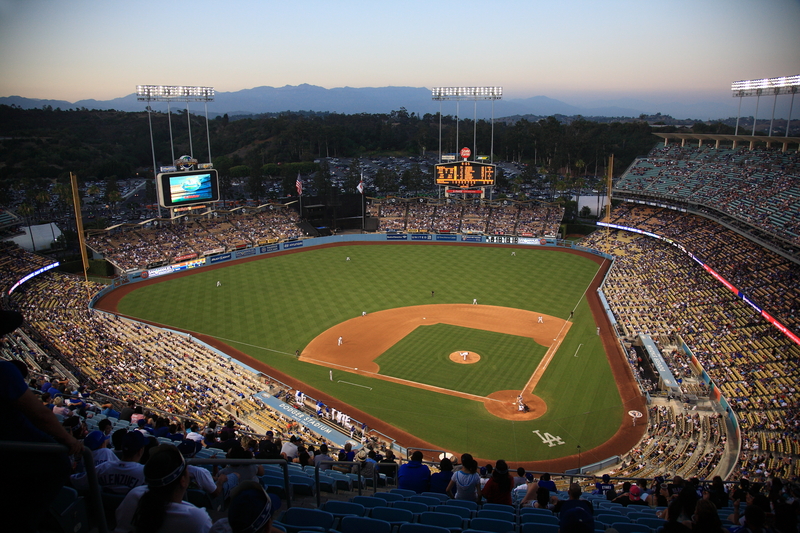
The Los Angeles Dodgers have made headlines once again, securing pitcher Tarik Skubal in a trade that has left many teams questioning their own strategies. While the Dodgers are known for their deep pockets and impressive roster, this acquisition highlights a more significant issue: why couldn’t other teams make a similar move?
As baseball braces for a potential lockout this winter, the focus isn’t solely on the Dodgers’ financial might. The team’s recent trade for Skubal, a player highly coveted around the league, underscores a troubling narrative among the owners of the other 29 teams. In a video played before each home game, a voice ominously states, “You need teams like us to point your finger and say, ‘That’s the bad guy.’” In this case, it’s the Dodgers, who have once again positioned themselves as the team to beat.
The Dodgers, back-to-back champions, have added a top player from the trade market, further fueling the narrative of inequity in the league. Critics lament that the Dodgers have “too much money,” but the reality is that their financial resources alone didn’t secure Skubal. The Detroit Tigers, when fielding offers, ultimately preferred the Dodgers’ package of three prospects, none of whom were first-round picks or ranked among the top 20 in baseball.
Among the prospects is outfielder Zyhir Hope, taken in the 11th round by the Chicago Cubs. The Dodgers acquired him through a trade involving major leaguer Michael Busch, who was exchanged for two prospects, including Hope, who has only played 11 games in rookie ball. Another prospect, pitcher River Ryan, was also drafted in the 11th round, this time by the San Diego Padres. He was acquired in a deal that sent Matt Beaty to San Diego, despite Ryan yet to making his professional debut. The third prospect, Brady Smith, was drafted in the third round by the Dodgers and is currently in his second professional season.
The Dodgers’ ability to develop talent is evident, as evidenced by Hope and Ryan being ranked No. 25 and No. 68, respectively, on the league’s prospect list. Baseball America places Hope at No. 55 but does not include Ryan or Smith in its top 100 rankings. As J.J. Cooper, editor-in-chief of Baseball America, noted, Hope was the third-best outfielder on the Dodgers’ Double-A roster, a testament to the team’s player development system.
While it’s uncertain if these prospects will meet the Tigers’ expectations, the trade raises questions about the disparity in player development across the league. Two out of three prospects traded at the deadline typically do not pan out, according to Baseball America research. For now, Skubal’s contract is a manageable $9 million, a figure within reach for most teams, yet some owners may argue otherwise.
In a league where market size often dictates success, the struggles of teams like the New York Mets and the Angels in larger markets raise eyebrows. The Mets, despite their financial capabilities, spent their time on Saturday fielding trade offers for players on a last-place team rather than pursuing Skubal, who could have bolstered their roster.
Ultimately, the Dodgers’ acquisition of Skubal serves as a reminder that success in baseball is not solely about money. Teams can build strong player development systems, regardless of market size. Yet, instead of learning from the Dodgers’ successes, other owners may find it easier to label them as “the bad guy.” Meanwhile, the league’s ongoing narrative of inequity continues to unfold, with teams grappling with their own identities and strategies as they watch the Dodgers once again reinforce their championship aspirations.
Note: This recap is an independently written summary based on publicly available reporting.