 SD
SD  MIL
MIL  ATL
ATL  LAD
LAD 
 WPG
WPG  DET
DET  UTA
UTA  NYR
NYR  FLA
FLA  ANA
ANA  CGY
CGY  SEA
SEA  VGK
VGK  VAN
VAN  IND
IND  WAS
WAS  NE
NE  BUF
BUF  NYJ
NYJ  CHI
CHI  JAX
JAX  CIN
CIN  ARI
ARI  NYG
NYG  LA
LA  PHI
PHI  GB
GB  TB
TB  TEN
TEN  BAL
BAL  DAL
DAL  HOU
HOU  MIA
MIA  MIN
MIN  KC
KC  LV
LV  DEN
DEN  SF
SF  LAC
LAC  SEA
SEA  DET
DET  CAR
CAR  UTA
UTA  DEN
DEN  GSW
GSW  LAC
LAC  CHW
CHW  CLE
CLE  NYY
NYY  TB
TB  PHI
PHI  TB
TB  OTT
OTT  BOS
BOS  PIT
PIT  SJ
SJ  DAL
DAL  ATL
ATL  NO
NO  MEM
MEM  ATL
ATL  PHX
PHX  DET
DET  NYK
NYK  PHI
PHI  MIN
MIN  MIL
MIL  LAL
LAL  SAC
SAC  CAR
CAR  MTL
MTL  NSH
NSH  TOR
TOR  NJ
NJ  MIN
MIN  BUF
BUF  NYI
NYI  STL
STL  CHI
CHI  LA
LA  BKN
BKN  CHA
CHA  NOP
NOP  OKC
OKC 

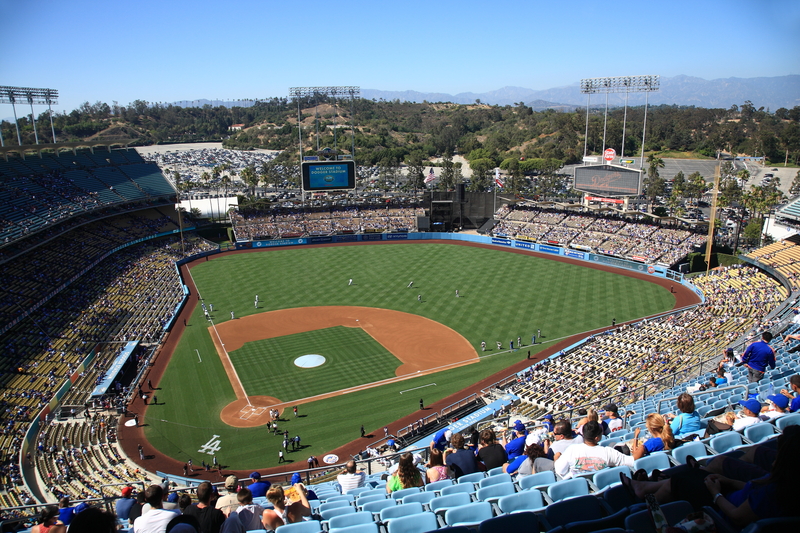
As the MLB season reaches its 60-day mark, the Los Angeles Dodgers continue to solidify their status as a powerhouse, sitting near the top of the National League standings and maintaining their position as a World Series favorite. However, while their on-field performance is impressive, a fascinating shift is occurring off the field in the sports card market.
The Dodgers’ card market is no longer a monolithic entity; it has evolved into multiple collectible economies, each reflecting different narratives and market dynamics. Some players are seeing their value skyrocket, others are stagnating despite strong performances, and a few are experiencing declines due to emerging uncertainties. Meanwhile, certain players have transformed into historical assets, where their value is driven more by legacy and scarcity than by weekly statistics.
Take Shohei Ohtani, for instance. His card market has transcended the typical superstar cycle as he remains an elite hitter. The real game-changer, however, is the prospect of him returning to the mound later this season, potentially re-entering Cy Young conversations. This shift has caused collectors to reassess Ohtani, not merely as the best hitter in the game but as a player capable of delivering an unprecedented two-way season. Consequently, his market has surged over 53% in the last 90 days, with increased demand for BBM rookies and high-end autographs.
In contrast, Yoshinobu Yamamoto’s market reflects a transition from pure projection to validation. Initially, collectors were pricing him based on his potential as he moved from Japan to the MLB. Despite some early ERA inconsistencies, his underlying metrics have remained robust, and the Dodgers’ confidence in him as a postseason arm has bolstered his card values. His market has climbed roughly 27%, driven by demand for PSA 10 rookies and Topps Chrome parallels.
Conversely, Roki Sasaki’s market has taken a downturn. Initially buoyed by lofty projections and international hype, Sasaki’s value has dropped around 18% due to concerns over his command and workload. This illustrates a crucial aspect of sports card pricing: while the market thrives on potential, it reacts swiftly to visible instability.
On the rise is Andy Pages, who has become one of the fastest-growing markets in baseball cards, with prices soaring over 70% in the past three months. His ascent is attributed to increased playing time and improved performance, which caught the eye of collectors before his highlights became widely recognized. Similar is the case for Hyeseong Kim, whose value surged following Mookie Betts’ injury, creating an immediate opportunity on a prominent roster.
Despite returning from injury, Betts’ market has remained relatively stable, reflecting the understanding of his established greatness. The card market tends to reward emerging narratives more than sustained excellence, indicating that for Betts to see a significant uptick in his value, he may need to deliver another MVP-caliber stretch or achieve notable milestones.
Pitchers like Blake Snell and Edwin Díaz face challenges in the collector market due to the inherent volatility associated with their positions. Snell’s injuries have dampened demand, while Díaz’s recent controversies have complicated his market presence. This disparity underscores the reality that pitchers generally struggle to achieve the same level of demand as hitters, largely due to fewer culturally impactful moments and greater injury risks.
The Dodgers exemplify the complexities of the modern sports card market, where narratives around historical significance, breakout potential, international interest, and uncertainty all play vital roles. As the season progresses, the market will continue to evaluate which players and their corresponding assets will emerge as undervalued as October approaches.
With the Dodgers still racking up wins, the card market is poised to determine which players will rise in value and which will face challenges as the postseason looms. The opportunity for growth remains, but so too do the risks associated with sustaining performance over the long haul.
Note: This recap is an independently written summary based on publicly available reporting.