 BUF
BUF  TOR
TOR  NYI
NYI  OTT
OTT  SEA
SEA  TB
TB  VAN
VAN  FLA
FLA  NYR
NYR  NJ
NJ  PHI
PHI  DET
DET  WPG
WPG  CHI
CHI  SJ
SJ  NSH
NSH  STL
STL  MIN
MIN  UTA
UTA  EDM
EDM  CGY
CGY  VGK
VGK  SEA
SEA  DEN
DEN  TOR
TOR  NYK
NYK  OKC
OKC  HOU
HOU  PIT
PIT  COL
COL  BOS
BOS  ANA
ANA  MIA
MIA  ORL
ORL  BOS
BOS  PHI
PHI  DET
DET  MIL
MIL  IND
IND  ATL
ATL  DAL
DAL  SAC
SAC  SAS
SAS  CHA
CHA  MEM
MEM  WAS
WAS  NOP
NOP  MIN
MIN  CHI
CHI  POR
POR  GSW
GSW  UTA
UTA  PHX
PHX  DEN
DEN  LAL
LAL  WSH
WSH  CAR
CAR  MTL
MTL  CBJ
CBJ  DAL
DAL  LA
LA 

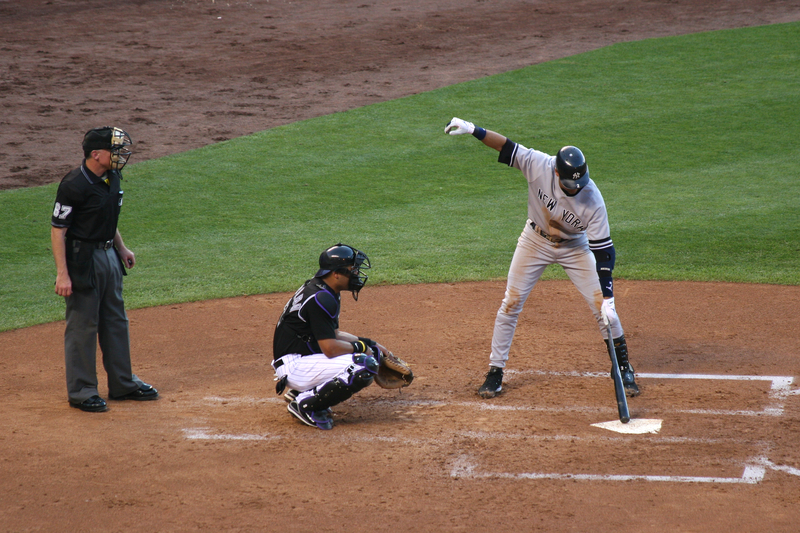
The Los Angeles Dodgers are shaking up Major League Baseball with their recent dominance. After securing back-to-back championships, they have made headlines again by signing the top free agent on the market, effectively outspending several teams combined for their entire payrolls in 2026. With such financial firepower, the anticipation is building that the Dodgers may very well clinch a third consecutive World Series title in 2026. If this happens, it raises concerns about the potential fallout for the league, reminiscent of the apathy that followed the New York Yankees’ three-peat in the late ’90s. Critics fear that fans from the other 29 teams may lose interest in the game altogether, leaving them with a feeling of hopelessness.
However, it’s important to pause and reassess this narrative. While it’s certainly frustrating for fans of other teams to witness the Dodgers flex their financial muscles, claiming they are ruining baseball seems exaggerated, especially coming from those who have cheered for the Yankees. The Yankees themselves made headlines in the 1998-1999 offseason by acquiring Roger Clemens after a historic 114-win season, and they went on to win the World Series that year and the next. Yet, rather than a mass fan exodus, attendance figures remained steady, with 70.37 million fans attending games in 1998 and only a slight drop to 70.13 million in 1999. The following year, attendance rose again to 72.74 million.
Television ratings also tell a similar story. The 1998 World Series achieved a Nielsen rating of 14.1, with viewership estimated at 20.34 million. The following year saw ratings improve to 16.0 and 23.73 million viewers. Even though there was a dip in 2000, those numbers rebounded strongly in 2001, indicating that fans continued to engage with the sport despite the Yankees’ dominance.
Some may argue that the Dodgers’ current spending spree is unprecedented, especially when compared to the Yankees of the late ’90s. While it’s true that the Dodgers’ projected Opening Day payroll for 2026 is set to soar to $397 million—far exceeding the New York Mets’ $367 million—it’s crucial to consider the context of inflation and overall spending in MLB. In their prime, the Yankees’ payrolls were significant, but when adjusted for inflation, their spending was comparable to what the Dodgers are doing now. For instance, the 1999 Yankees had a payroll that was 8.3% higher than the Texas Rangers, while the Dodgers’ current payroll is 9% above the Mets’.
Ultimately, the Yankees were viewed as villains during their three-peat years, yet fans remained engaged and continued to fill stadiums across the league. While it’s valid for fans of smaller market teams to express frustration with the Dodgers’ financial advantage, it’s also essential for Yankees fans to recognize that their own team’s history is not without similar controversies. In the end, the conversation about the Dodgers and their impact on the game may be more nuanced than many are willing to admit.
Note: This recap is an independently written summary based on publicly available reporting.