 TOR
TOR  BAL
BAL  WSH
WSH  DET
DET  MIN
MIN  SF
SF 
 PHI
PHI  WSH
WSH  DET
DET  CBJ
CBJ  BUF
BUF  PIT
PIT  NYR
NYR  NJ
NJ  OTT
OTT  MTL
MTL  COL
COL  WPG
WPG  MIN
MIN  CHI
CHI  STL
STL  DAL
DAL  NYG
NYG  LA
LA  TB
TB  NYY
NYY  STL
STL  PIT
PIT  MIL
MIL  PHI
PHI  CLE
CLE  BOS
BOS  CIN
CIN  ATL
ATL  MIA
MIA  CHC
CHC  CHW
CHW  KC
KC  NYM
NYM  TEX
TEX  ARI
ARI  COL
COL  LAA
LAA  OAK
OAK  HOU
HOU  SEA
SEA  SD
SD  LAD
LAD  BOS
BOS  NYI
NYI  FLA
FLA  CAR
CAR  EDM
EDM  TB
TB  NSH
NSH  VAN
VAN  CGY
CGY  UTA
UTA  LA
LA  VGK
VGK  SJ
SJ 

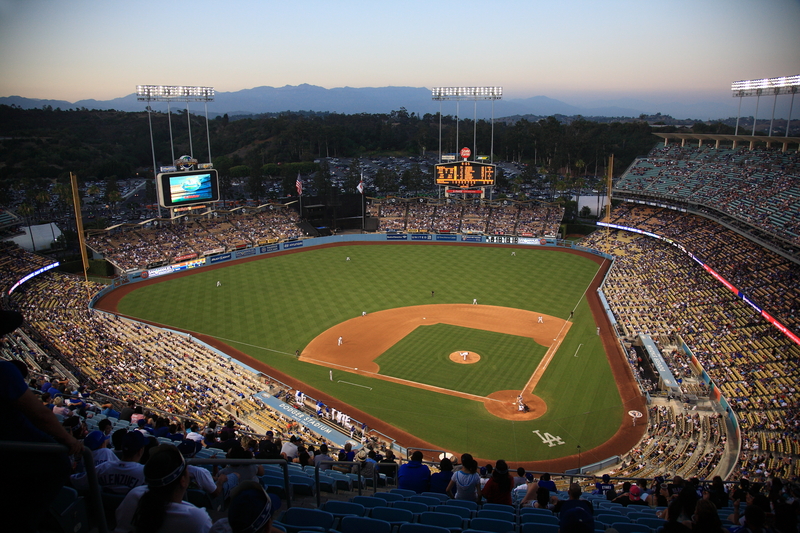
The Dodgers have wrapped up a grueling stretch of 13 consecutive games, finishing with a record of 6-7. Yet, this time, they defied recent trends of frequently shuffling their pitching staff, a strategy that has become all too familiar in past seasons. Over the last two weeks, the team made just one pitching change, calling up left-hander Jake Eder on April 20. This move was necessitated by closer Edwin Díaz undergoing arthroscopic surgery on his elbow, a situation that had the potential to trigger a flurry of roster adjustments.
Reflecting on the rarity of such stability, Eder remarked, “I had thrown two innings, three innings, then I think I was going to go four the next time out, but then they said, ‘Are you good going one, so you could be available to come pitch here?’” Eder, who joined the Dodgers from the Washington Nationals on April 1, had been preparing for this moment while pitching in bulk relief for Triple-A Oklahoma City.
Since being activated, Eder has made three appearances, pitching one inning each time. His contributions were pivotal, culminating in his first major league win during a comeback against the Miami Marlins, sealed by Kyle Tucker’s walk-off single. Despite the need for Eder’s arm, the Dodgers’ starting pitchers have shouldered the load effectively, averaging 6.05 innings per start over this stretch. With nine starts lasting at least six innings and a collective ERA of 2.40, the rotation has allowed the bullpen to remain largely fresh.
The Dodgers’ pitching staff has been bolstered by the presence of Shohei Ohtani, who not only contributes as a starter but also uniquely qualifies as a two-way player, exempting him from the active roster limit of 13 pitchers. This has garnered attention across the league, particularly from Chicago Cubs manager Craig Counsell, who noted the unusual advantage Ohtani provides. “There’s one team that’s allowed to carry basically one of both, and that he gets special consideration. Which is probably the most bizarre rule,” Counsell commented.
Dodgers president of baseball operations Andrew Friedman addressed the implications of the two-way player rule, acknowledging its competitive advantages while emphasizing the importance of Ohtani’s role. “It’s certainly an advantage, but it should be an advantage. What Shohei does and what he’s capable of is so unique, it should be rewarded, it should be celebrated,” Friedman stated, reinforcing the notion that all teams had equal opportunities to sign Ohtani when he entered the league.
Ohtani’s presence not only allows the Dodgers to manage their pitching staff more efficiently but also enables the rest of the rotation to start on ample rest. Throughout this 13-game stretch, Ohtani has pitched 12 of the 113 innings, allowing the remaining pitchers to cover only 101 innings. This has significantly lightened the burden on the bullpen, with relievers only appearing on consecutive days seven times during this period.
When Ohtani rejoined the Dodgers rotation last June, the team was cautious, allowing him to gradually build up his innings. Now, with Ohtani consistently pitching six innings in each of his five starts in 2026, the Dodgers are experiencing one of their most stable roster stretches in recent memory. General manager Brandon Gomes previously referred to Ohtani’s contributions as “free innings,” and the current results demonstrate just how valuable those innings have become.
Note: This recap is an independently written summary based on publicly available reporting.