 TOR
TOR  BAL
BAL  WSH
WSH  DET
DET  MIN
MIN  SF
SF 
 PHI
PHI  WSH
WSH  DET
DET  CBJ
CBJ  BUF
BUF  PIT
PIT  NYR
NYR  NJ
NJ  OTT
OTT  MTL
MTL  COL
COL  WPG
WPG  MIN
MIN  CHI
CHI  STL
STL  DAL
DAL  NYG
NYG  LA
LA  TB
TB  NYY
NYY  STL
STL  PIT
PIT  MIL
MIL  PHI
PHI  CLE
CLE  BOS
BOS  CIN
CIN  ATL
ATL  MIA
MIA  CHC
CHC  CHW
CHW  KC
KC  NYM
NYM  TEX
TEX  ARI
ARI  COL
COL  LAA
LAA  OAK
OAK  HOU
HOU  SEA
SEA  SD
SD  LAD
LAD  BOS
BOS  NYI
NYI  FLA
FLA  CAR
CAR  EDM
EDM  TB
TB  NSH
NSH  VAN
VAN  CGY
CGY  UTA
UTA  LA
LA  VGK
VGK  SJ
SJ  TOR
TOR  ANA
ANA 

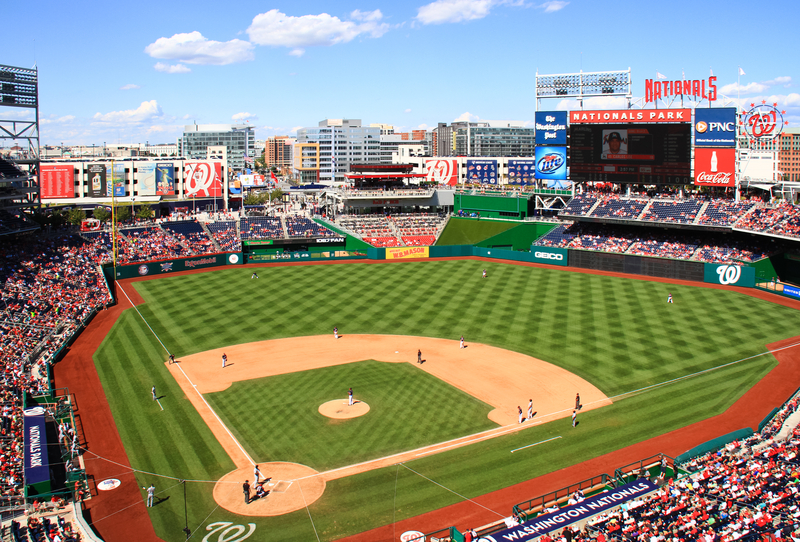
After a rocky start to the season, the Washington Nationals bullpen has begun to show signs of improvement. While still not a strength, the unit has managed to keep the Nationals competitive in recent games, thanks in part to solid performances from pitchers like Gus Varland and Richard Lovelady. Their efforts were on full display in yesterday’s game against the Mets, where the trio of Mitchell Parker, Lovelady, and Varland combined to allow just one run over five innings, paving the way for C.J. Abrams’ crucial go-ahead home run.
Leading the charge is Gus Varland, who delivered a gutsy four-out save in that contest. With a 2.84 ERA and a 2.66 FIP across 13 appearances, Varland has established himself as a reliable option in the bullpen. His fiery demeanor on the mound and ability to generate swings and misses showcase the qualities of a true closer. “I need to be confident on the mound,” Varland shared, reflecting his introspective nature despite the high-pressure environment of Major League Baseball.
At 29, Varland, a former 14th round pick from Concordia University, has only made 55 appearances in the majors, making his current success all the more significant. He has found a home in Washington, and alongside his brother Louis, who is excelling with the Blue Jays, 2026 is shaping up to be a breakout year for the Varland siblings.
While Varland boasts the best strikeout stuff in the bullpen, he is not alone in his recent success. Over the last five games, the Nationals’ bullpen has surrendered just three runs in 19.2 innings, marking a steady decline in their collective ERA. Though it is important to temper expectations, the fact that they can hold their nerve in tight games is promising.
After experimenting with various pitchers, the Nationals have identified a few reliable arms. Although the team is likely to continue with a closer-by-committee approach, Varland has emerged as the top candidate for the ninth inning, given his blend of strikeout capability and control. He does have a tendency to give up hard contact, yet his ability to escape jams is invaluable.
Richard Lovelady has also been impressive, posting a 2.63 ERA this season. His deceptive pitching has baffled hitters, while other arms like Paxton Schultz, Brad Lord, and P.J. Poulin have provided solid support. With a little more experience in high-leverage situations, Lord could further bolster the bullpen’s effectiveness.
Cionel Pérez has shown improvements since a rough outing against the Dodgers, managing a sub-4 ERA since April 6. Despite lingering concerns about his control, his recent performance offers a glimmer of hope. The return of Cole Henry and Clayton Beeter, both of whom were expected to be key contributors before injuries sidelined them, could further enhance the bullpen’s depth.
Before the season, predictions suggested a much-improved bullpen, a notion that seemed far-fetched at the outset. However, the Nationals have made strides, lowering their bullpen ERA from 5.59 last year to 4.90 after April. If this trend continues, a mid- to high-4s ERA by season’s end is within reach, marking a significant improvement. While the bullpen is not yet a formidable force, the Nationals and their fans can take solace in the progress made thus far. Fingers crossed that this upward trajectory continues.
Note: This recap is an independently written summary based on publicly available reporting.