 BUF
BUF  TOR
TOR  NYI
NYI  OTT
OTT  SEA
SEA  TB
TB  VAN
VAN  FLA
FLA  NYR
NYR  NJ
NJ  PHI
PHI  DET
DET  WPG
WPG  CHI
CHI  SJ
SJ  NSH
NSH  STL
STL  MIN
MIN  UTA
UTA  EDM
EDM  CGY
CGY  VGK
VGK  SEA
SEA  DEN
DEN  TOR
TOR  NYK
NYK  OKC
OKC  HOU
HOU  PIT
PIT  COL
COL  BOS
BOS  ANA
ANA  MIA
MIA  ORL
ORL  BOS
BOS  PHI
PHI  DET
DET  MIL
MIL  IND
IND  ATL
ATL  DAL
DAL  SAC
SAC  SAS
SAS  CHA
CHA  MEM
MEM  WAS
WAS  NOP
NOP  MIN
MIN  CHI
CHI  POR
POR  GSW
GSW  UTA
UTA  PHX
PHX  DEN
DEN  LAL
LAL 

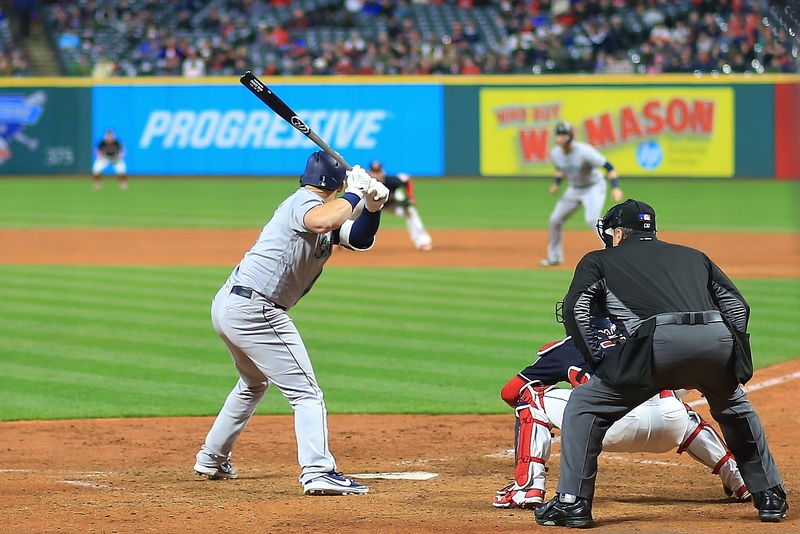
In a performance that left onlookers buzzing, Kade Anderson took the mound for the Mariners, showcasing his potential in what he insists isn’t a debut. “Since my family didn’t come to see this, I don’t count it as a debut,” he remarked, but his impressive showing spoke volumes nonetheless.
Anderson’s fluid delivery was evident as he consistently fired fastballs in the 94-95 mph range, leaving hitters baffled. His slider was sharp, generating swings and misses both in and out of the strike zone, while his changeup drew comparisons to Matt Brash’s effective pitches. In his very first encounter, he struck out Xander Bogaerts on just three pitches, demonstrating his command with a whiff on a fastball, another on a changeup, and a freeze on a second fastball. Despite a few hiccups, including a full-count walk and an infield hit that should have been an out, Anderson struck out the side in the inning, throwing 18 pitches, 13 for strikes, and achieving a remarkable 100% first-pitch strike rate.
When he returned for the second inning, Anderson faced back-to-back hits that led to runs after he was pulled, but the overall impression he left was of a young pitcher with significant upside. Cal Raleigh, who caught Anderson, praised his debut, saying, “Very impressive. He can locate the ball, command it, and throw off-speed in the zone for strikes.” He added a lighthearted jab at his brother’s earlier spring training struggles for context, saying, “I think Logan gave up 10 runs in his first spring training game.”
Anderson attributed his calm demeanor to his mindset, stating, “I think you’d be surprised. It’s just another game for me. And when you have that mindset, it makes it much easier on yourself; you don’t get as many nerves.”
While Anderson’s departure marked a turning point, as Houston Roth struggled to contain the Padres, allowing five runs, the game regained some intrigue when Emerson Hancock took the mound. Hancock delivered a solid 1-2-3 inning, maintaining the extra velocity he had shown in previous relief outings. The Mariners plan to use him as a depth starter this season, and his ability to sustain velocity will be crucial moving forward. In his second inning, he struck out the side but showed signs of fatigue in an attempt at a third inning, clocking in at 94-96 mph—still notably above his usual range.
Hancock’s slider is also showing promise. After making adjustments in the offseason, he seems to have found a balance between velocity and movement, producing a whiff-generating pitch that could elevate his game. Despite past disappointments, there’s a sense of cautious optimism about Hancock’s development this spring.
Note: This recap is an independently written summary based on publicly available reporting.