 CHW
CHW  CLE
CLE  NYY
NYY  TB
TB 
 PHI
PHI  TB
TB  OTT
OTT  BOS
BOS  WPG
WPG  PIT
PIT  SJ
SJ  DAL
DAL  ATL
ATL  NO
NO  MEM
MEM  ATL
ATL  PHX
PHX  DET
DET  NYK
NYK  PHI
PHI  MIN
MIN  MIL
MIL  LAL
LAL  SAC
SAC  LAD
LAD  ATL
ATL  MIL
MIL  SD
SD  CAR
CAR  MTL
MTL  NSH
NSH  TOR
TOR  DET
DET  UTA
UTA  NJ
NJ  MIN
MIN  BUF
BUF  NYI
NYI  NYR
NYR  STL
STL  CHI
CHI  VGK
VGK  SEA
SEA  FLA
FLA  LA
LA  BKN
BKN  CHA
CHA  NOP
NOP  OKC
OKC  DEN
DEN  UTA
UTA  GSW
GSW 

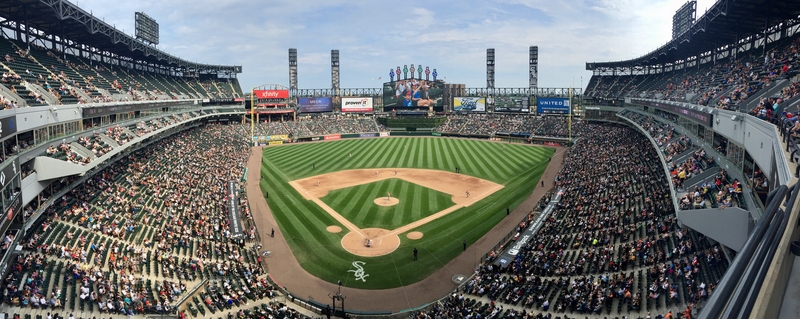
On May 21, the Chicago White Sox have a rich history filled with remarkable moments, starting as early as 1905 when Frank Smith pitched a one-hitter against the Washington Senators, marking the first of his career and the fifth in the team’s history. The game didn’t start ideally for Smith; he allowed a run in the first inning after walking Charlie Jones, who was then sacrificed to second base and driven home by a single from Jake Stahl. That would be the only hit the Senators would muster, as Smith bounced back to help his own cause with a double in the fifth inning. After being sacrificed to third by Fielder Jones, he scored on a bobbled ground ball at shortstop, securing a 2-1 victory for the Sox.
Smith would go on to throw two more one-hitters during his time with the White Sox, a feat only surpassed by legends Doc White, Ed Walsh, and Billy Pierce in franchise history.
Fast forward to 1915, Red Faber showcased his endurance in a grueling 17-inning contest against the Boston Red Sox at Comiskey Park, where he secured his seventh consecutive win in a 3-2 thriller. Both Faber and Boston’s Carl Mays came in as relievers, effectively pitching a second complete game on the day. Faber dazzled on the mound, throwing ten scoreless innings while allowing just six hits and one walk, striking out eight batters as the White Sox held onto first place in the American League with a 20-12 record.
The day also marked a historic moment in 1943 when the White Sox played the fastest nine-inning game in franchise history, defeating the Senators 1-0 in just one hour and 29 minutes. Johnny Humphries threw a stellar three-hitter, even scoring the game’s only run after leading off the fifth with a double and being driven home by Thurman Tucker’s single.
In a significant trade in 1956, the White Sox dealt George Kell, Mike Fornieles, Connie Johnson, and Bob Nieman to the Baltimore Orioles in exchange for Dave Philley and Jim Wilson. While Philley had a lackluster finish to the 1956 season, Wilson, who had shone previously, struggled in Chicago. The trade ultimately proved detrimental for the White Sox, as Nieman and Johnson flourished with Baltimore, showcasing the disparity in the deal.
May 21, 1980, saw the White Sox, despite a 3-2 loss to the Minnesota Twins, maintaining their position at the top of the AL West with a record of 22-16. The game attracted nearly 34,000 fans to Comiskey Park, eager to support a competitive squad. However, the White Sox would soon embark on a four-game losing streak that would see them slip from first place.
Lastly, in 2009, the White Sox faced one of their most humiliating defeats, tying their record for the worst loss in franchise history with a staggering 20-1 blowout against the Twins at U.S. Cellular Field. Bartolo Colón, Lance Broadway, and Jimmy Gobble struggled mightily, with Colón allowing seven unearned runs among the eight he surrendered.
Note: This recap is an independently written summary based on publicly available reporting.