 BUF
BUF  TOR
TOR  NYI
NYI  OTT
OTT  SEA
SEA  TB
TB  VAN
VAN  FLA
FLA  NYR
NYR  NJ
NJ  PHI
PHI  DET
DET  WPG
WPG  CHI
CHI  SJ
SJ  NSH
NSH  STL
STL  MIN
MIN  UTA
UTA  EDM
EDM  CGY
CGY  VGK
VGK  SEA
SEA  DEN
DEN  TOR
TOR  NYK
NYK  OKC
OKC  HOU
HOU  PIT
PIT  COL
COL  BOS
BOS  ANA
ANA  MIA
MIA  ORL
ORL  BOS
BOS  PHI
PHI  DET
DET  MIL
MIL  IND
IND  ATL
ATL  DAL
DAL  SAC
SAC  SAS
SAS  CHA
CHA  MEM
MEM  WAS
WAS  NOP
NOP  MIN
MIN  CHI
CHI  POR
POR  GSW
GSW  UTA
UTA  PHX
PHX  DEN
DEN  LAL
LAL  WSH
WSH  CAR
CAR  MTL
MTL  CBJ
CBJ  DAL
DAL  LA
LA 

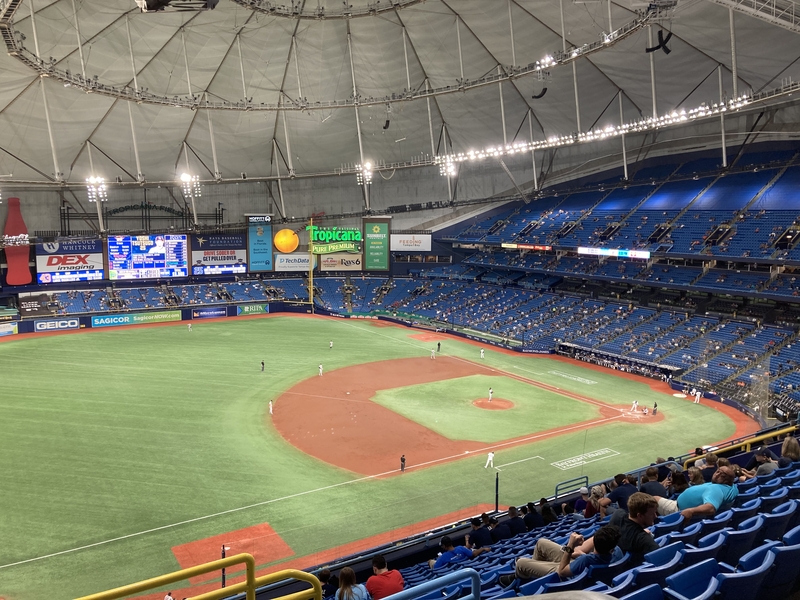
The Tampa Bay Rays have wrapped up their first week of games, taking on two teams from the National League Central. As the team looks to gain momentum in April, several early trends have emerged that promise to shape their season. While it’s still early in the campaign, these indicators provide valuable insights into the team’s performance and potential.
One of the standout statistics is the offense’s zone-minus-out-of-zone swing rate, which currently sits at a level slightly above league average, ranking 13th overall. This reflects a continuation of the positive swing decisions observed during spring training, where the rate was 40.0%. Although some hitters have shown a bit more aggressiveness early in counts, both the eye test and the data affirm that the quality of at-bats from the Rays’ lineup remains high. With the talent on their 40-man roster, this trend is expected to persist as they settle into the season.
Another significant number is the team’s contact rate, which ranks third in the league. This strong performance aligns with roster moves made over the past ten months and is supported by spring training data. The Rays are making contact at a comfortably plus rate, contributing to their offensive effectiveness.
Additionally, the Rays boast an impressive 90th percentile exit velocity, ranking fifth in the league. This above-average raw power, paired with the high contact rate and quality plate appearances, has resulted in a potent offense. While some regression in batting average on balls in play (BABIP) is expected, the Rays are projected to remain among the league’s more effective teams in that category, bolstered by their strong contact skills and hard-hit balls.
A noteworthy metric to keep an eye on is the combined line drive plus fly ball rate, which has improved compared to spring training but remains a point of skepticism. After finishing near the bottom of the league last year at 46.0%, the Rays are now showing a more competitive figure. Sustaining a top-10 mark over the full season may be a stretch, but achieving a league-average rate would signify a meaningful advancement from last season.
Lastly, the rate at which the defense converts batted ball events into outs stands as the ninth lowest in the league. While this isn’t cause for alarm just yet, it raises some concerns. The outfield has performed well, converting 66.1% of plays, which is above the league average of 60.7%. However, the infield’s conversion rate of 82.6%, below the average of 89.1%, is a point of concern. With average or better defenders at every infield position, there’s reason to believe this will improve over time, especially with a tougher divisional schedule looming in May.
On a positive note, Chandler Simpson has emerged as one of the most impressive defenders on the team. After a strong spring, he has seamlessly transitioned into the regular season, making several eye-catching catches, including one with a 20% catch probability. His reactions and routes have shown significant improvement compared to last season, suggesting that he could earn a larger role as the season progresses.
Note: This recap is an independently written summary based on publicly available reporting.