 CHC
CHC  CIN
CIN  KC
KC  PIT
PIT  MIL
MIL  BAL
BAL  OAK
OAK  CLE
CLE  BOS
BOS  TB
TB  PHI
PHI  NYM
NYM  DET
DET  CHW
CHW  TOR
TOR  TEX
TEX  SEA
SEA  COL
COL  ATL
ATL  HOU
HOU  WSH
WSH  STL
STL  MIN
MIN  LAA
LAA  NYY
NYY  ARI
ARI  MIA
MIA  SD
SD  SF
SF  LAD
LAD 
 MTL
MTL  TOR
TOR  DAL
DAL  STL
STL  WPG
WPG  EDM
EDM  CHI
CHI  MIN
MIN  VGK
VGK  LA
LA  VAN
VAN  SEA
SEA 

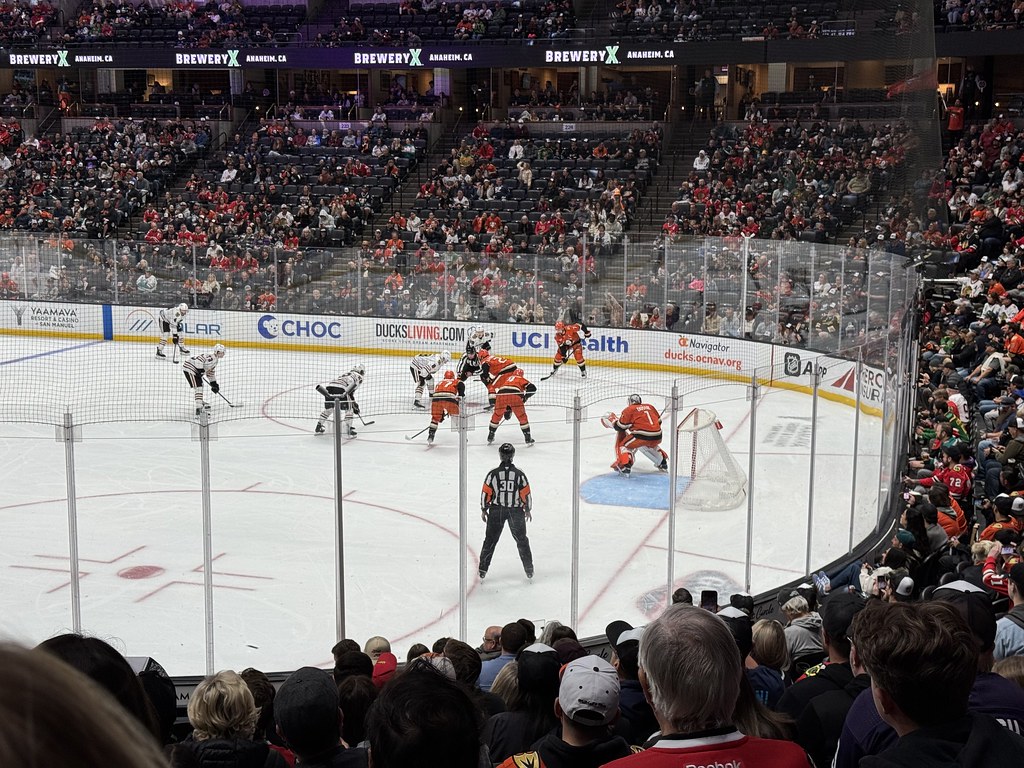
The Anaheim Ducks’ 2025-26 season has concluded, and as the 2026 NHL Entry Draft approaches, it’s an opportune moment to reflect on the performances of each player in the organization. In this edition of ‘By the Numbers,’ we spotlight players who donned numbers 11 through 20 this past season.
Colangelo entered the season with hopes of securing a depth position on the NHL roster after gaining valuable experience in 2024-25. Following a two-year contract signed in August, he made the opening night roster against the Seattle Kraken but found himself as a healthy scratch for the subsequent four games. After six games back in the lineup, he was assigned to AHL San Diego, where he spent most of the season, aside from two brief call-ups that allowed him to play one game each time. With only 44 games of NHL experience by December, next season could be Colangelo’s last chance to solidify a full-time role with the Ducks, especially as he approaches his 25th birthday and the end of his contract.
Nesterenko’s journey mirrored that of Colangelo, as he spent considerable time with the NHL team but played only 29 games over three months. He faced a series of healthy scratches, particularly in December, and even went unclaimed on waivers before being recalled. A strong forechecker, he had a standout performance in the seventh game of the season, racking up four points. His ability to meet the criteria set by head coach Joel Quenneville for a bottom-six forward earned him consistent playing time until December. As he turns 25 in September and enters the final year of his contract, Nesterenko will also compete for a spot on the Ducks’ 2026-27 roster, showcasing versatility by playing all three forward positions and contributing on the penalty kill.
Helleson made a notable switch to No. 14 this offseason, a nod to both his desire to honor the number four and respect the legacy of former Duck Cam Fowler, who wore No. 4. After signing a two-year deal last summer, Helleson began the season on the bottom defensive pair but quickly moved up to the top pair with Jackson LaCombe following an injury to Radko Gudas. Although they initially gelled, Helleson struggled as his ice time increased and eventually returned to the bottom pairing in January. He made his playoff debut alongside rookie Tyson Hinds but saw his season cut short by a groin strain. With potential free agency losses looming on the Ducks’ right defense, Helleson could play a crucial role moving forward.
It was a challenging season for Strome, who missed the first month due to an oblique injury. His return coincided with the emergence of rookie Beckett Sennecke, complicating his role on the team. Strome’s skill set didn’t align with what Quenneville sought in the top-six forwards, and he found himself frequently scratched as the season progressed. Ultimately, his lack of playing time led to a trade to the Calgary Flames at the deadline in exchange for a seventh-round pick in 2027, freeing up cap space for the Ducks. Though his time in Anaheim ended on a low note, Strome was a respected figure in the locker room and played a significant role in the team’s development since joining as a free agent in 2022.
As the Ducks gear up for the upcoming season, Killorn will enter the final year of a four-year, $25 million deal signed in July 2023. His role was intended to support rookie Leo Carlsson, but a preseason finger fracture sidelined him for the first month. Upon returning, Killorn resumed playing alongside Carlsson, although injuries plagued his debut season. He underwent knee surgery in January to address a lingering issue but has since showcased impressive durability, playing in all 82 games this past season. Killorn has proven to be a valuable asset, particularly on the penalty kill, solidifying his status as one of general manager Pat Verbeek’s best acquisitions.
Terry faced significant challenges this season, battling through a chronic hip impingement that affected his performance. Despite this, he still managed to accumulate 57 points in 61 games, narrowly missing his fifth consecutive 20-goal season. As a key player on the power play, he has evolved into more of a facilitator, especially with the addition of players like Cutter Gauthier and Beckett Sennecke. Recently, the Ducks announced that Terry underwent successful surgery to address his hip issues, with an expected recovery time of five to six months. This development opens the door for other players to step up in his absence as the team prepares for the next season.
Kreider joined the Ducks last June after a trade with the New York Rangers, contributing immediately as a top-line player. He netted seven goals and five assists in November, reaching the 20-goal mark for the eighth consecutive season. However, his production waned towards the end of the season, with only three assists in the final seven games of the regular season and limited contributions in the playoffs. At 35, Kreider is entering the final year of his contract, and while he may not be suited for a top-line role moving forward, his experience and scoring ability remain valuable assets for the team. As the Ducks continue to build toward the future, Kreider’s presence will be crucial in finding the right balance on the roster.
Note: This recap is an independently written summary based on publicly available reporting.