 MTL
MTL  CHI
CHI  TB
TB  COL
COL  CHI
CHI  MIL
MIL  NYK
NYK  BOS
BOS  ATL
ATL  CHA
CHA  DAL
DAL  IND
IND  MIN
MIN  ORL
ORL  TOR
TOR  WAS
WAS  DET
DET  MIA
MIA  HOU
HOU  SAS
SAS  NOP
NOP  UTA
UTA  MEM
MEM  GSW
GSW  LAC
LAC  LAL
LAL  POR
POR  SAC
SAC  ANA
ANA  PHI
PHI  LA
LA  NJ
NJ  SJ
SJ  BOS
BOS  NYR
NYR  OTT
OTT  NSH
NSH  PIT
PIT  BUF
BUF  WSH
WSH  VGK
VGK  CBJ
CBJ  CAR
CAR  STL
STL  TOR
TOR  EDM
EDM  UTA
UTA  DET
DET  CGY
CGY  MIN
MIN  SEA
SEA  BKN
BKN  CLE
CLE  PHI
PHI  DEN
DEN  PHX
PHX  FLA
FLA  NYI
NYI  DAL
DAL  WPG
WPG  VAN
VAN  PIT
PIT  NO
NO  SF
SF  ATL
ATL  CLE
CLE  TEN
TEN  IND
IND  MIN
MIN  MIA
MIA  NYJ
NYJ  TB
TB  CAR
CAR  CIN
CIN  BAL
BAL  NYG
NYG  HOU
HOU  DEN
DEN  ARI
ARI  GB
GB  DET
DET  LA
LA  LV
LV  KC
KC  SEA
SEA  OKC
OKC 

The Boston Red Sox made a significant move today, trading left-handed pitcher Connelly Early to the Washington Nationals in exchange for infielder Curtis Mead. This trade raises eyebrows, as it involves parting ways with a homegrown talent known for his potential, while hoping to bolster the lineup with a player who has recently found his stride.
Saying goodbye to Early is no small feat. A left-handed starter developed within the organization, he represents a valuable asset in the world of baseball. Fans appreciated not just his talent on the mound but also his personality, evident in his memorable debut last season. Early’s off-field charm was humorously highlighted by a recent photo, suggesting he was already working on a sitcom about rookie pitchers turned detectives.
However, Early’s performance raised some questions. Despite his popularity, his game displayed inconsistencies this season, with an alarming increase in home runs allowed and a FIP that exceeds his ERA by a full run. Compounding the concern, he is currently dealing with an injury, a common issue for pitchers at the Major League level.
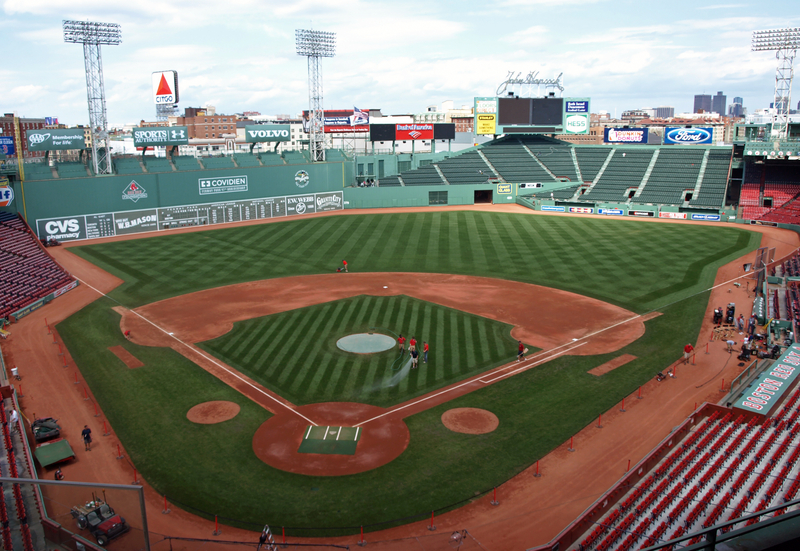
In return, the Red Sox have acquired Curtis Mead, whose recent play has piqued interest. The right-handed hitter has demonstrated significant power, making him a potentially strong fit for the Fenway Park dimensions. With a .351 on-base percentage, Mead ranks just behind Willson Contreras and Connor Wong in on-base skills among Red Sox players.
Yet, the question remains: can Mead sustain this performance? His recent surge has only materialized over the past three months, and prior to this season, he had recorded a total of -0.2 bWAR across parts of three seasons, with only five home runs and an on-base percentage hovering around .300. His defensive capabilities also raise concerns; Mead lacks speed and is considered a liability in the field, which may force him into a third base role, potentially impacting the defensive quality of the infield.
Despite these uncertainties, there’s a glimmer of hope for Mead as a late bloomer. Hailing from Australia, he only shifted his focus to baseball after stepping away from Aussie Rules Football as a teenager. His talent caught the eye of scouts, earning him spots on various prospect rankings, peaking at #16 for Baseball Prospectus. His expected wOBA of .350, compared to an actual wOBA of .371, suggests that his recent success might not be purely luck.
For the Red Sox, the trade is a calculated risk. With depth in pitching, even if tested, the team aims to address its offensive weaknesses by trading from strength. The hope is that Curtis Mead will prove to be a consistent contributor, rather than a fleeting talent. General Manager Craig Breslow is banking on Mead fitting into the category of players who take time to blossom in the big leagues, rather than those who experience short-lived success.
Note: This recap is an independently written summary based on publicly available reporting.